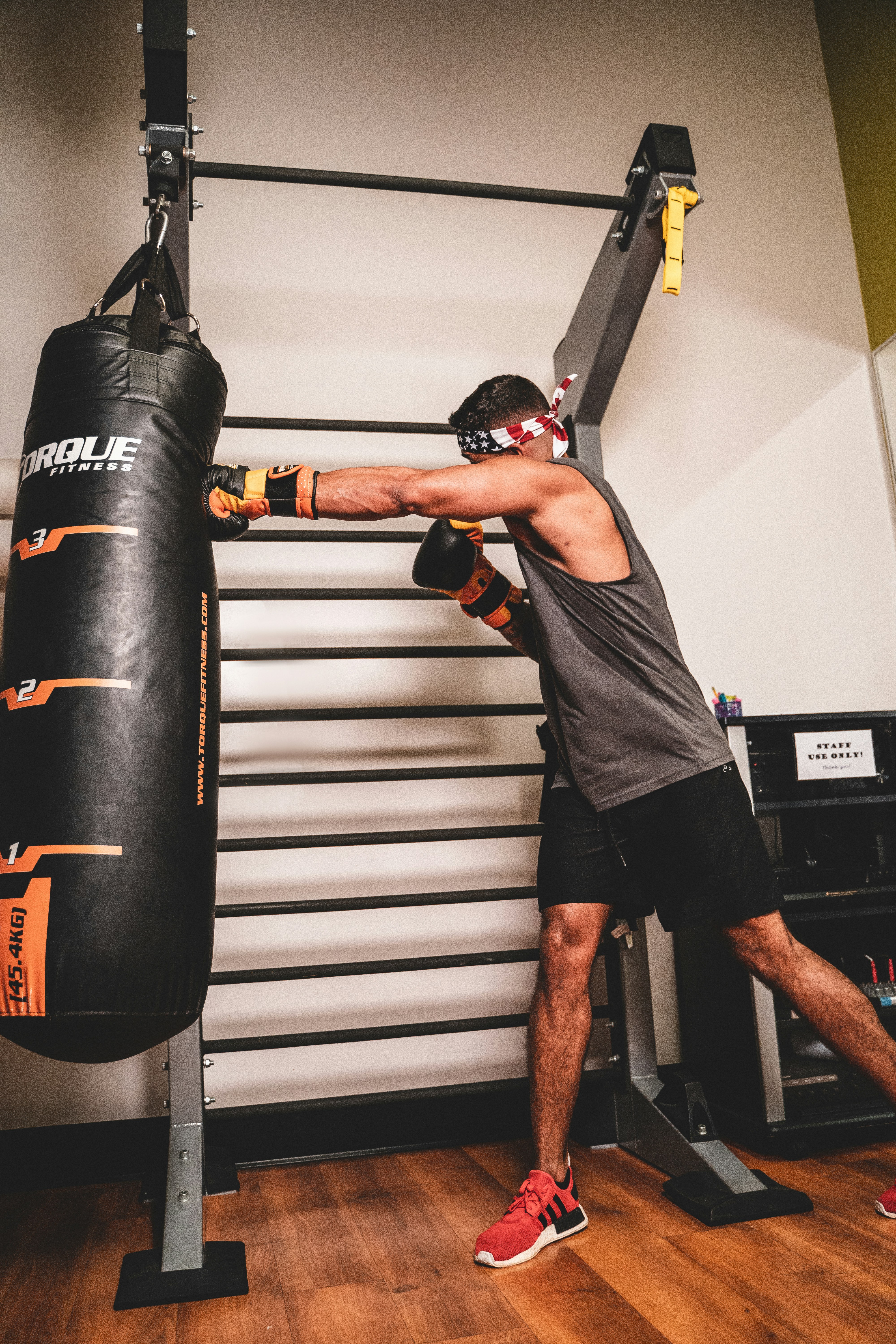
Hanging a heavy bag in an apartment usually isn't an option. Most ceilings aren't rated for it, most leases prohibit it, and even if you could, the swinging motion of a hung bag needs more clearance than a shared building comfortably allows. A freestanding bag solves the installation problem entirely — fill the base, position it, and train. When you move out, you drain it and take it with you, no holes to patch.
Quick answer
The Century Wavemaster XXL is the pick. It's the largest freestanding bag on the market, standing 69 inches tall with a 52-inch, 18-inch-diameter striking surface, and the base fills with sand or water for up to 270 lbs of stability. High-density foam under a durable vinyl cover means it holds up to years of regular striking without developing the lumps that plague cheaper bags.
Being freestanding rather than hung, it tips onto the edge of its base and rolls, which means you can move it into a closet or corner between sessions instead of leaving it permanently set up in the middle of a room.
The honest space requirement
This is not a bag that disappears into a studio apartment the way a foam roller does. At 69 inches tall with an 18-inch striking diameter, you need real clearance to actually circle and strike it properly — figure on a roughly 5-foot radius of open floor space around the bag itself, not just the footprint of its base.
If you're working with genuinely tight square footage, this is a bag you'll want to roll out for training sessions and roll back into a corner or closet afterward, rather than something that stays permanently set up. The rolling base makes that realistic; a heavier hanging setup would not.
Why freestanding beats hanging for renters**
A hung heavy bag needs a ceiling joist rated for the combined weight of the bag plus impact force, which the vast majority of apartment ceilings simply aren't built for. Even where a stud finder turns up a viable joist, most leases explicitly prohibit that kind of permanent mounting hardware.
The Wavemaster's locked-nut stem and tapered base eliminate that requirement entirely. There's no drilling, no bracket, and nothing left behind when you move — just a base you empty and a bag section that detaches for transport.
Managing noise and floor impact
Freestanding bags still create floor vibration, even without the swinging motion of a hung bag — every strike transfers some impact through the base into your floor. A thick rubber gym mat or interlocking foam tile section underneath the base absorbs a meaningful amount of that before it reaches a downstairs neighbor.
Training in short, structured rounds rather than long continuous sessions also helps here, both for noise exposure and because it mirrors how the bag is actually meant to be used — focused rounds with rest between them, not an unbroken hour of strikes.