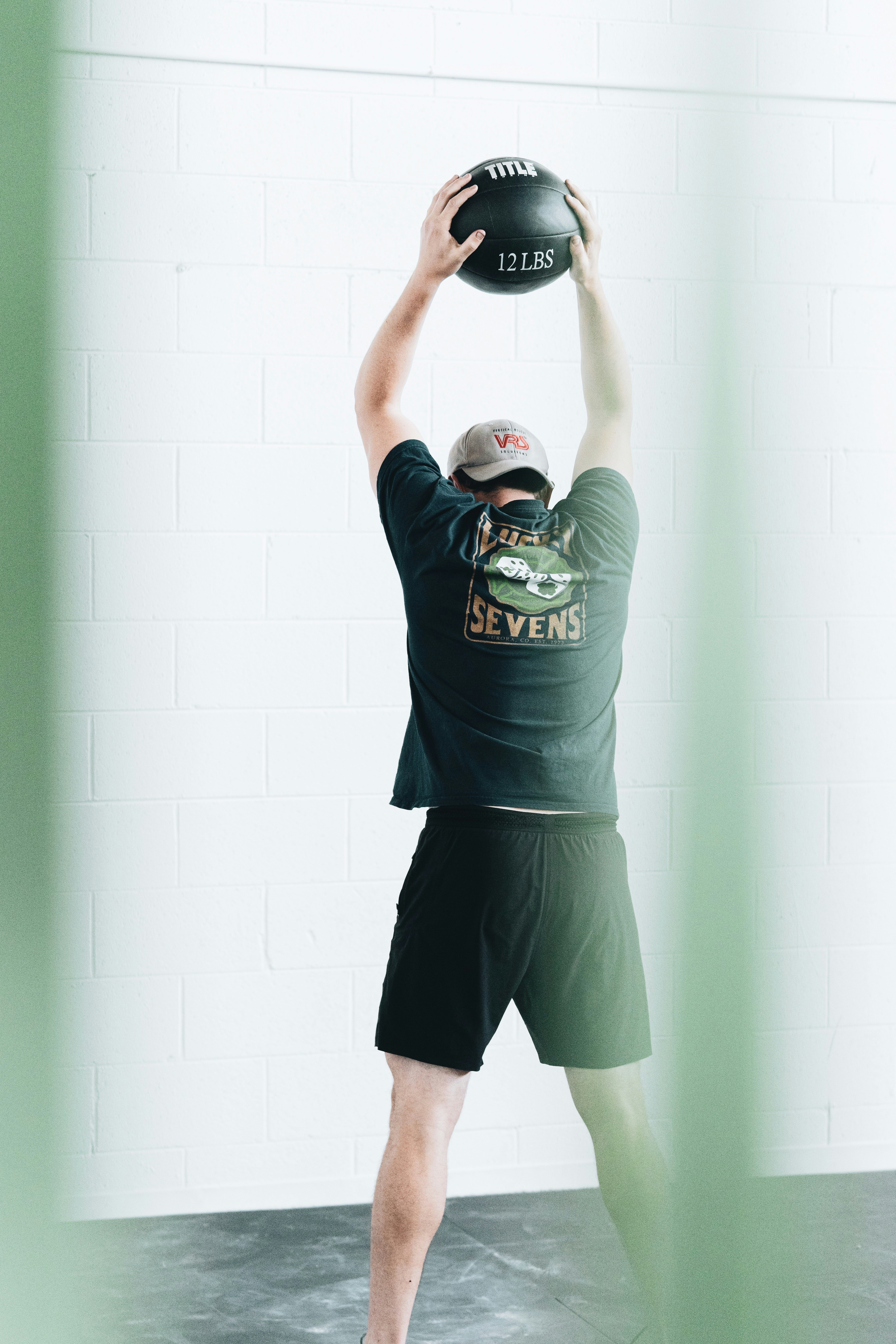
Medicine balls and slam balls look nearly identical on a shelf, but they're built for opposite purposes. A traditional medicine ball is designed to bounce -- useful for tosses, twists, and rhythmic drills. A slam ball is sand-filled specifically to kill the bounce, built for throwing straight down into the floor. In most homes that's just a training preference. In an apartment, especially above ground floor, it's the difference between a normal workout and a genuine noise or floor-damage risk.
Quick answer
For most apartment dwellers, the Amazon Basics Weighted Medicine Ball is the safer default -- its bounce behavior means it's built for tosses, twists, and controlled catches rather than being thrown at the floor. The Amazon Basics Heavy-Duty Slam Medicine Ball is genuinely great equipment, but it's specifically designed for the kind of hard downward slams that translate directly into floor impact noise -- worth real caution if you're above the ground floor.
Comparison table
| Product | Price | Bounce Behavior | Apartment Risk | Best For |
|---|---|---|---|---|
| Amazon Basics Weighted Medicine Ball | $15–$35 depending on weight | Bounces off hard surfaces | Lower -- not designed for hard slams | Tosses, twists, controlled catches |
| Amazon Basics Heavy-Duty Slam Medicine Ball | $20–$40 depending on weight | Dead-weight, no bounce | Higher on upper floors -- pair with floor protection | Explosive slams, HIIT, ground floor/concrete units |
Details above are editorial summaries and approximate street prices at the time of writing — confirm specifics on each current listing.
Why the bounce difference matters more here than anywhere else
A slam ball's entire design goal is preventing bounce -- sand fill absorbs the impact instead of returning energy upward, which is exactly why CrossFit gyms use them for explosive slams. That same design means all of that impact energy goes somewhere else: straight into whatever's under it. On a concrete slab or ground floor, that's a non-issue. On a wood-frame upper floor, repeated slams are one of the more likely sources of a genuine noise complaint or even visible floor stress over time.
What each is actually good for
A bouncing medicine ball supports wall-toss drills, rotational throws with a partner, and controlled catches -- movements that don't rely on a hard floor slam to be effective. A slam ball is purpose-built for exactly what its name says: explosive, high-intensity slams, typically part of HIIT or CrossFit-style conditioning work. If your training goal specifically requires that slamming motion, a bounce ball won't substitute well -- but pairing a slam ball with real floor protection becomes essential rather than optional.
How to choose for your specific apartment
Ground floor or concrete construction -- either option is reasonable, and a slam ball opens up more explosive training options. Upper floor or wood-frame construction -- lean toward the bouncing medicine ball for most work, and if you do want a slam ball, pair it with a dense mat and consider limiting slam sessions to reasonable hours.