Real kettlebell training rarely works with just one weight — swings and cleans want more load than presses and get-ups do, and most people end up needing three to five different bells to train a full body properly. That's manageable in a garage. In an apartment, it's a growing row of iron eating the floor space you actually wanted to train in. An adjustable kettlebell — one bell, a dial or pin that changes the working weight — exists specifically to solve that. The real question is whether the trade-offs in cost and feel are worth it compared to just buying two or three fixed bells and living with the extra footprint.
The real problem: kettlebell progression needs more than one weight
A single kettlebell is great for one specific job. The problem shows up once you actually start progressing — swings, cleans, and goblet squats all want a heavier bell over time than presses and get-ups do, and most people end up needing three to five different weights to train a full body properly. In a house, that's a corner of the garage. In an apartment, that's a growing row of iron sitting on the floor, usually right where you'd rather have open space.
An adjustable kettlebell exists specifically to solve this: one bell, one footprint, a dial or pin that changes the working weight. The real question isn't whether that's a clever idea — it obviously is — it's whether the trade-offs (cost, feel, mechanism) are worth it compared to just buying two or three fixed bells and accepting the extra floor space.
Comparison table
| Product | Price | Rating | Weight Range | Best For |
|---|---|---|---|---|
| Bowflex SelectTech 840 | $149 | 4.8/5 | ~8-40 lb, dial-adjust | Budget-conscious buyers who want the closest-to-traditional kettlebell feel |
| PowerBlock Adjustable Kettlebell | $249.99 | 4.7/5 | Up to ~35 lb, pin-selector | Buyers who want a flatter storage profile or already trust the PowerBlock brand |
Details above are editorial summaries and approximate street prices at the time of writing — confirm specifics on each current listing.
What actually changes when the weight is adjustable
Both products here use a selectorized system rather than loose plates — you turn a dial or move a pin, and the working weight locks in, similar in concept to how Bowflex and PowerBlock's well-known adjustable dumbbells work. That's a mature, proven mechanism category, not a first-generation gimmick.
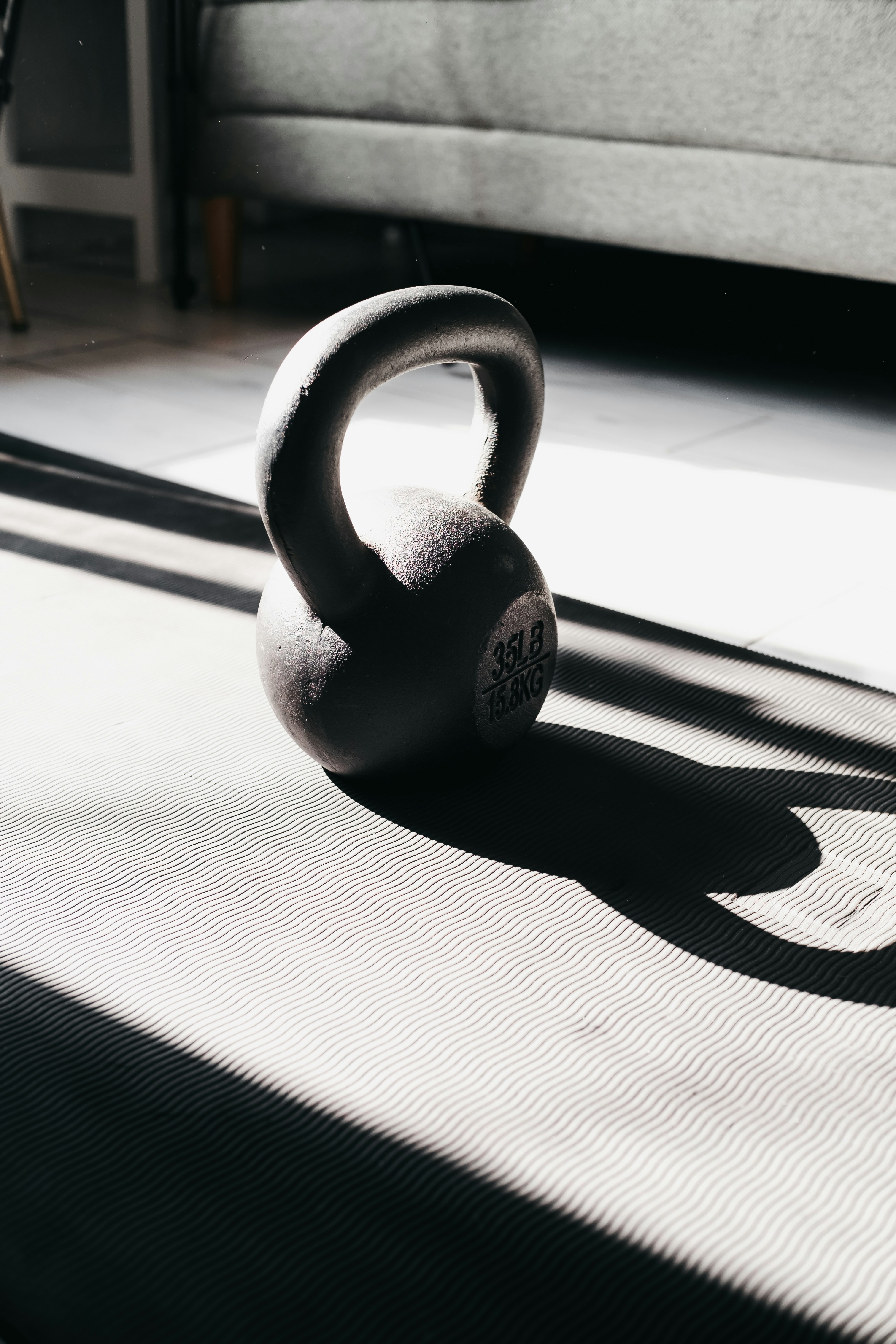
What changes physically is the shape. A solid cast-iron kettlebell is one smooth, rounded mass. An adjustable kettlebell's selector housing adds length and a bit of bulk above the handle, which shifts the balance point slightly compared to a traditional bell. Most people adjust to this within a session or two of swings and cleans — but if you're already an experienced kettlebell lifter with strong technique on heavy ballistic work, it's worth knowing going in rather than being surprised by it.
Bowflex SelectTech 840 vs. PowerBlock Adjustable Kettlebell
The Bowflex SelectTech 840 uses a dial-adjust system covering roughly an 8–40 lb range in one bell, with its own base/tray so it's not rolling around loose between uses. It's the same dial mechanism Bowflex is already known for on their adjustable dumbbells, which is a point in its favor — it's a system that's been through a lot of real-world use, not a new design.
The PowerBlock Adjustable Kettlebell uses PowerBlock's pin-selector system, familiar from their long-running adjustable dumbbell line, adjusting up to about 35 lb. PowerBlock's dumbbells are known for a dense, flat-block profile rather than a traditional round shape, and the kettlebell version carries that same design language — which stores flatter but is a bigger visual and grip departure from a traditional rounded kettlebell than the Bowflex's dial head is.
At $149, the Bowflex is the cheaper option and covers a wider weight range. At $249.99, the PowerBlock costs significantly more for a narrower top-end weight — the case for it comes down to trusting PowerBlock's build reputation or preferring its flatter storage profile over the Bowflex's shape.
Who should just buy two or three fixed kettlebells instead
If your actual training only needs one or two weight jumps — say a light bell for presses and get-ups and a heavier one for swings — two fixed kettlebells will almost always be cheaper than either adjustable option here, and you get the pure, uncompromised feel of solid cast iron. The adjustable premium only pays off when the alternative is genuinely three-plus separate bells competing for floor space.
It's also worth being honest that an adjustable kettlebell is a mechanical product with a moving selector — there's more that could eventually wear or need attention than with a solid casting. For most home users that's a minor long-term consideration, not a reason to avoid the category, but it's part of the honest trade-off.
The real-life verdict
If you're building toward real progression — several distinct working weights across swings, cleans, presses, and get-ups — and floor space is the actual constraint, an adjustable kettlebell earns its keep. Between these two, the Bowflex SelectTech 840 is the stronger default pick for most apartment lifters: cheaper, wider weight range, and closer to a traditional kettlebell feel. The PowerBlock is worth the extra cost mainly if you specifically want its flatter storage profile or already trust the brand from their dumbbells.
If you only need one or two weights, skip both and buy fixed kettlebells instead — you'll save money and get the truer feel, and the storage problem this article is solving simply won't apply to you yet.