There's a quiet assumption running through most fitness culture: more space, more equipment, more options equals a better setup. A full garage gym. A membership to three different studios. Unlimited machines. But consistency -- the thing that actually determines whether any of it works -- doesn't correlate with abundance the way people assume. Sometimes it runs the other way entirely.
The friction problem nobody talks about
Every extra step between you and a workout is a chance to talk yourself out of it. Drive to the gym. Find parking. Wait for a machine. Drive home. Shower. Each one is small, but they stack, and decision fatigue is real -- the more steps involved, the more opportunities exist for "I'll go tomorrow" to win.
A home setup collapses nearly all of that friction. The workout starts the moment you decide to start it. There's no commute, no waiting, no social anxiety about who's watching. For a lot of people, that alone is worth more than any amount of extra equipment variety a full gym offers.
Limited options remove a different kind of friction: decision fatigue
A gym with forty machines sounds like more freedom, but it can also just mean forty decisions before you've done a single rep. What am I training today? Which machine is free? Am I doing this right? A small, fixed rotation of equipment -- the kind that fits in an apartment -- removes most of that. You have what you have. You use what you have. The decision is already made before you start.
This isn't a hypothetical. Behavioral research on habit formation consistently points to reduced choice and reduced friction as two of the strongest predictors of whether a new behavior actually sticks past the first few weeks, more than motivation or willpower do.
What this actually looks like in practice
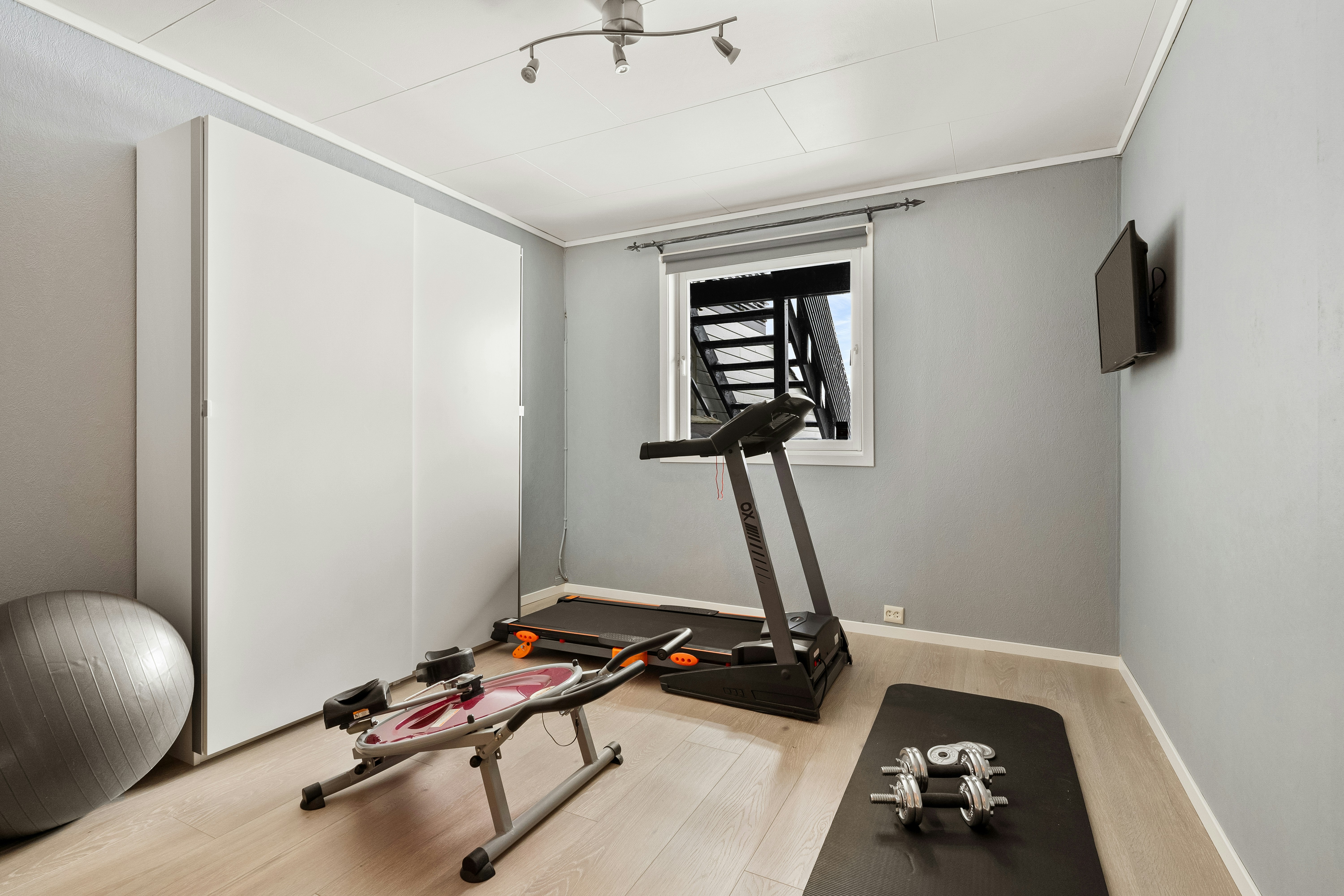
Someone with a full garage gym might train inconsistently because the sheer range of options makes every session feel like it needs to be planned. Someone with a pair of adjustable dumbbells, a mat, and fifteen minutes has fewer excuses and fewer decisions -- which paradoxically makes it easier to just start.
This is really the underlying thesis of everything covered across this site: not that small-space equipment is a lesser version of a real gym, but that it removes exactly the kind of friction that determines whether fitness becomes a habit or a New Year's resolution that fades by February.
The honest caveat
This isn't a claim that constraints are always better, or that a full gym can't work well for someone who thrives on variety and structure. Different people respond to different environments, and there's genuine research on both sides of how much choice helps versus hinders habit formation.
What's worth taking from this is narrower and more useful: if you've struggled to stay consistent with a full gym setup, the problem might not be discipline. It might just be friction. And friction is exactly the thing a small, well-chosen apartment setup is built to remove.