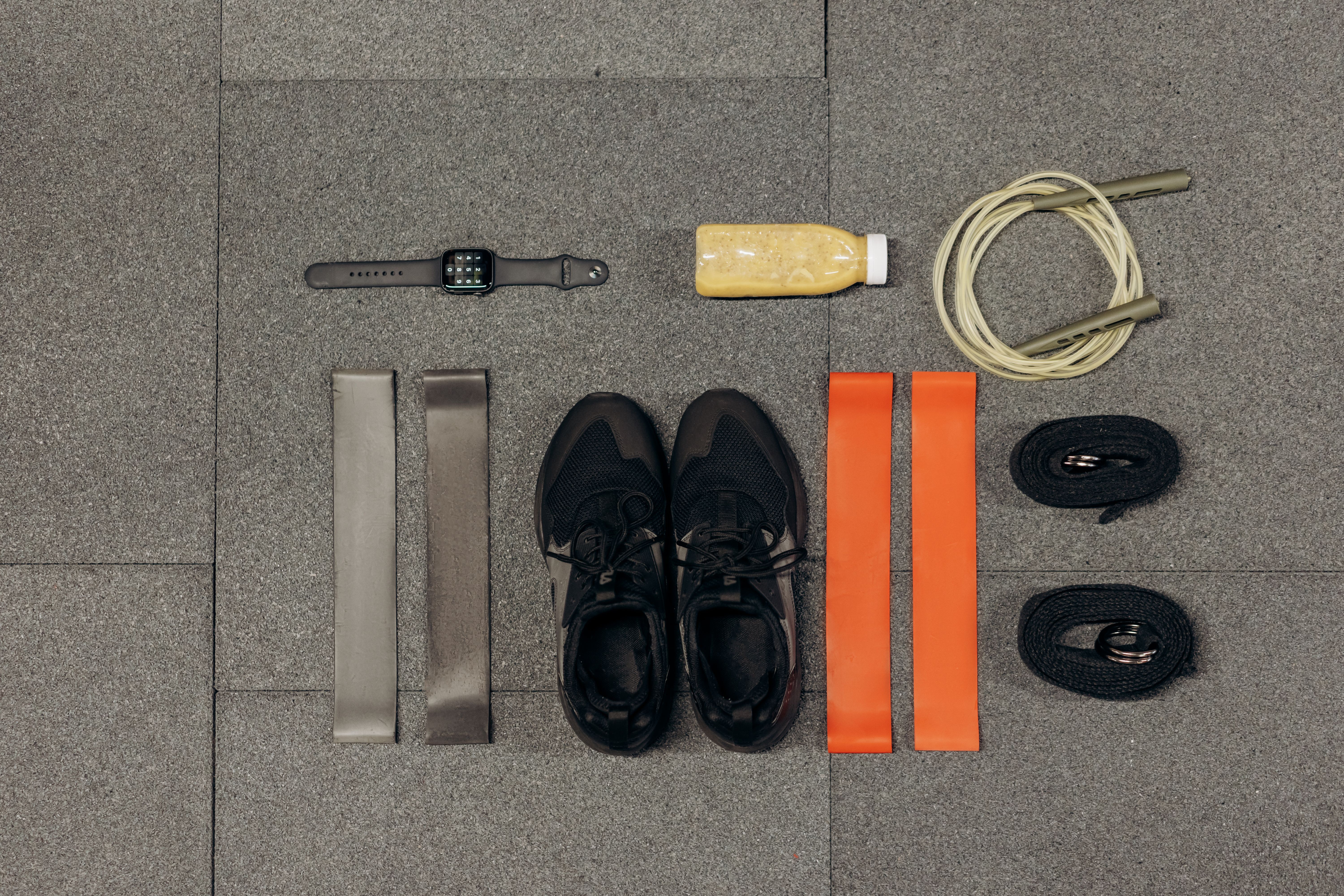
Most "home gym for small spaces" advice assumes your biggest constraint is square footage. If you're renting, square footage is the easy part. The real constraints are the ones your lease writes down: no drilling into studs, no permanent wall anchors, no modifications without written approval, and a security deposit riding on the walls and floors looking the way they did on move-in day. Add a downstairs or next-door neighbor you'd rather not test, and "small-space equipment" stops being the whole problem. We've already built dedicated, in-depth picks for most of the individual pieces that pass this test — this page exists to put them in one place, organized around the actual renter constraints, so you can build a full setup without piecing it together from six separate searches. Every pick below either needs zero wall or floor modification, or uses a genuinely removable method (a door-frame anchor, a tension fit, a floor mat) that a landlord walkthrough won't flag.
The Renter Test: the four questions generic gear guides don't ask
Before anything on this page, every pick had to clear the same four checks. If a product fails any one of these, it didn't make the list, no matter how good it is for someone who owns their walls.
Does it require drilling, wall anchors, or a permanent mount? If yes, it's out, full stop — most leases either ban this outright or require written landlord approval that's rarely worth chasing for a piece of gym equipment. Can it be fully removed and leave no trace? A door-frame pull-up bar that uses tension and rubber padding instead of screws passes. A wall-mounted squat rack doesn't, even if the studs could technically hold it. Is it quiet enough for the people below or beside you? A renter's noise tolerance from neighbors is usually lower than a homeowner's, because the relationship is more fragile — a noise complaint to a landlord carries different weight than one between neighbors who both own their units. Does it hold value or pack down if you move? Renters relocate more often than owners by definition of the arrangement. Equipment that's heavy to ship, loses most of its resale value, or only works in one specific room layout is a worse bet here than it would be in a house you're not leaving in a year.
Everything below passes at least the first two. Where something only partly clears the third or fourth, we say so directly rather than glossing over it.
- No drilling, wall anchors, or permanent mounting of any kind
- Fully removable with zero visible trace when you move out
- Quiet enough that a shared wall or floor isn't a dealbreaker
- Reasonably portable or resellable if you relocate within a year or two
Strength training without touching a wall
Resistance bands are the single most renter-proof piece of strength equipment that exists, and it isn't close. They need no anchor point beyond your own hands and feet for most exercises, roll up into a drawer, weigh almost nothing if you move, and a full graduated set covers a strength range that would otherwise need several dumbbell pairs. The trade-off is real, not imaginary: bands feel different under load than free weights, and the resistance curve (easiest at the start of the movement, hardest at full stretch) doesn't match a dumbbell's constant resistance. We cover which specific sets are worth buying, and when a fixed-weight option still makes more sense, in our full resistance bands breakdown (squarefootathlete.com/articles/best-resistance-loop-bands-apartment).
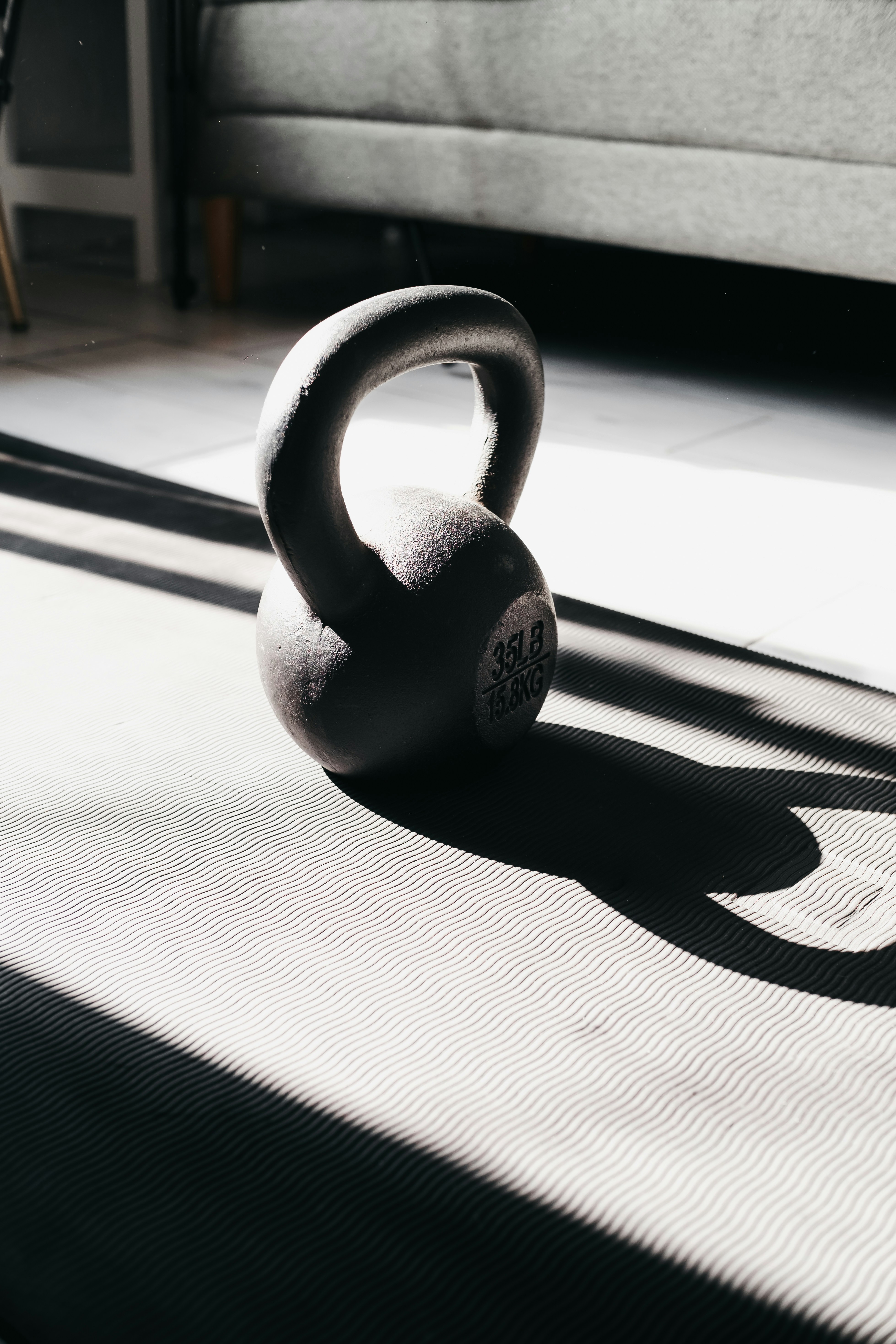
A single adjustable kettlebell is the best renter-safe option once you want external load heavier than bands comfortably provide. One adjustable bell replaces a rack of fixed kettlebells in roughly the floor space of a shoebox, and unlike a loaded barbell, it has no setup that could plausibly mark a floor if you're using it on a rug or a mat. The honest limitation: adjustable kettlebells top out lower than a fixed-weight rack would, and the adjustment mechanism adds a small amount of bulk and cost per pound versus buying fixed bells outright. Our full kettlebell picks (squarefootathlete.com/articles/best-adjustable-kettlebell-apartment) go through which models handle the adjustment mechanism best, plus a separate weatherproof pick (squarefootathlete.com/articles/weather-resistant-kettlebell-balcony) if yours is living on a balcony rather than indoors.
If you're trying to decide between the two instead of owning both, our bands-vs-adjustable-dumbbells comparison (squarefootathlete.com/articles/resistance-bands-vs-adjustable-dumbbells) lays out exactly when each one wins — it's written around a dumbbell rack specifically, but the floor-space and resale logic transfers directly to the kettlebell decision too.
Bodyweight and pull training without drilling into the door frame
A pull-up bar is the one category where renters have historically had to choose between a real screw-mounted bar (good hold, bad for your door frame) and a flimsy tension-only bar that flexes or slips under bodyweight. The no-screw doorway bars that have actually gotten good in the last few years solve this properly: a wide, padded contact surface and a tension mechanism rated for real bodyweight pulling, not just hanging knee raises. Our dedicated no-drill pull-up bar guide (squarefootathlete.com/articles/best-no-drill-pull-up-bars-apartments) covers the two that actually hold up, including the one difference that matters most between them — door frame width tolerance, which is the thing that actually determines whether a given bar fits your specific doorway, not just its weight rating.
A suspension trainer (the strap-and-handle style, not a rigid bar) is the other major no-drill option for pull and press movements, anchored over the same door frame or through an over-door hook instead of a permanent mount. It's more versatile than a pull-up bar alone — rows, presses, core work, not just pulling — at the cost of needing a bit more setup per session than a bar that just stays mounted. Full picks and the door-anchor-vs-wall-mount question are in our suspension trainer guide (squarefootathlete.com/articles/best-suspension-trainer-apartments).
Cardio and recovery that won't bother the apartment below you
Battle ropes technically work in an apartment, but they're the item on this page with the most caveats — they need an anchor point (a door anchor works, a drilled wall mount doesn't, so insist on a kit that includes one), real ceiling height to avoid hitting a fan or light fixture, and they're genuinely loud against a hard floor unless you're on a thick mat. We go through exactly how to make them work (and when they don't) in our battle ropes in an apartment breakdown (squarefootathlete.com/articles/do-battle-ropes-work-in-an-apartment) — it's the most honest "should you actually buy this" piece on the site, including the renter-specific anchor question.
A jump rope costs almost nothing, stores in a pocket, and needs zero mounting of any kind, but it's one of the worst choices for a downstairs neighbor on a hard floor. A mini trampoline is the quieter alternative that solves the same cardio need with a much smaller impact footprint — we compare both directly, including which specific trampolines are actually quiet rather than just marketed as "low-impact," in our jump rope vs. mini trampoline comparison (squarefootathlete.com/articles/jump-rope-vs-mini-trampoline-apartment).
A massage gun needs nothing mounted, nothing anchored, and makes almost no sound that travels through a wall or floor — of everything on this page, it's the pick with zero renter caveats attached. Our compact massage gun picks (squarefootathlete.com/articles/best-compact-massage-gun-small-apartments) focus specifically on models small enough to actually justify apartment storage, not just "portable" in the marketing sense.
Protecting the deposit itself: floors, noise, and move-out day
Equipment choice solves half the renter problem. The other half is what's underneath it. A proper mat does two separate jobs that are easy to conflate: it protects your actual floor (scuffs, dropped weight dents, rust from a sweaty kettlebell sitting on hardwood) and it absorbs impact noise for whoever's below you. Thin yoga-mat-style padding does neither job well under real equipment — you want something built for impact and weight, which we cover specifically in our gym flooring and noise reduction guide (squarefootathlete.com/articles/best-gym-flooring-noise-reduction), and the broader neighbor-relations side of the noise question in our apartment workout noise guide (squarefootathlete.com/articles/apartment-workout-noise-guide).
Move-out day is where a lot of renters discover their setup wasn't as reversible as they assumed. Equipment that disassembles cleanly and stores flat travels and resells better than anything bulky or permanently shaped — our storage hacks guide for studio apartments (squarefootathlete.com/articles/storage-hacks-gym-equipment-studio-apartment) covers this from the day-to-day angle, but the same logic applies directly to packing a car or a moving truck. As a general rule, anything on this page that needed an anchor, a door, or a specific room layout to work should come down and go in a box before anyone walks through to inspect the unit — not get left in place and explained to a landlord after the fact.
Ready to actually buy something? The four picks below — one per category — are each chosen specifically because they independently rank well on "[category] for renters" searches, not a random bundle. Buy them separately as needs and budget allow; none of them depend on the others. Together they cover strength (bands), heavier load (kettlebell), pull and bodyweight work (pull-up bar), and recovery (massage gun) — the four categories a renter can fully outfit without a single screw, anchor, or wall modification. Battle ropes and a suspension trainer are deliberately left out of this starter kit (both still covered above with links to their full guides) since both need a door anchor and more setup friction than a true "first buy" list should carry.