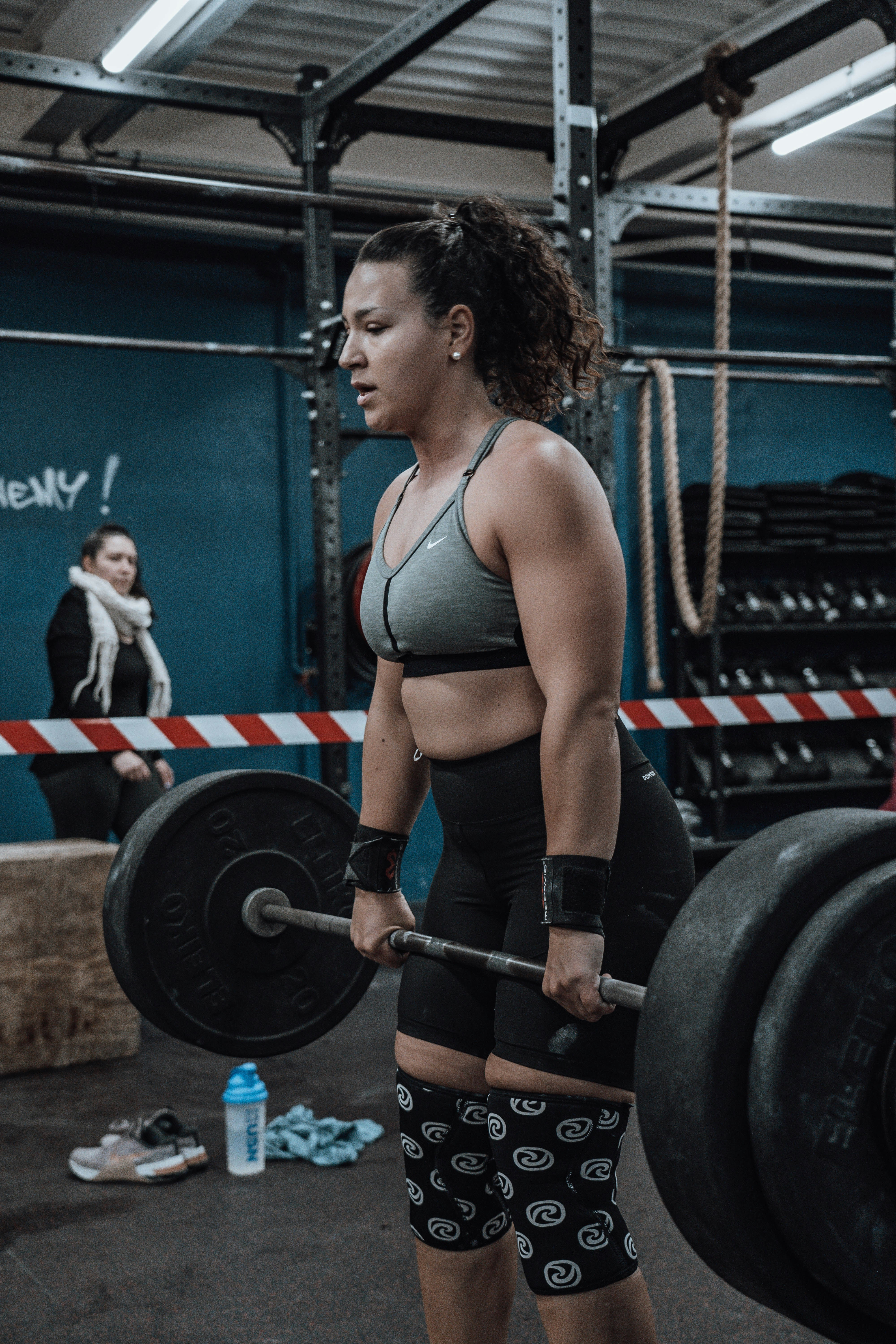
Wrist wraps solve a different problem than the lifting straps already covered on this site. Straps help your grip hold onto a bar longer; wraps stabilize the wrist joint itself during pressing movements like bench press, overhead press, and push-ups under load. For a small apartment strength setup built around adjustable dumbbells and a folding bench, wrist wraps are a genuinely useful, nearly weightless addition.
Quick answer
The Gymreapers Weightlifting Wrist Wraps are the well-proven, competition-grade pick -- rated 4.8 out of 5 across 186 reviews, IPF approved and tested by competitive powerlifters. The Nordic Lifting Wrist Wraps (2 Pairs) are a genuinely strong value alternative -- rated 4.5 out of 5 across 1,587 reviews, giving you two full pairs for situations like sharing with a partner or having a backup on hand. If your training is more CrossFit or Olympic-lifting-style than straight powerlifting, the WOD Nation Wrist Wraps -- rated 4.6 out of 5 across 2,957 reviews -- use a more flexible weave built for that kind of movement.
Comparison table
| Product | Length | Stiffness | Price | Rating | Best For |
|---|---|---|---|---|---|
| Gymreapers Wrist Wraps | 18" | Stiff (IPF-approved) | $18–$25 | 4.8 stars across 186 reviews | Heavy barbell lifts, competition |
| Nordic Lifting Wrist Wraps | 14" | Medium | $12–$18 for two pairs | 4.5 stars across 1,587 reviews | General all-purpose training |
| WOD Nation Wrist Wrap | 18" | Flexible | $12.99 | 4.6 stars across 2,957 reviews | CrossFit & Olympic lifting |
Details above are editorial summaries and approximate street prices at the time of writing — confirm specifics on each current listing.
Wrist wraps vs. the lifting straps already covered on this site
Lifting straps wrap around a bar, dumbbell, or attachment and connect to your hands, extending how long your grip holds on during pulling movements like rows and deadlifts. Wrist wraps wrap around your wrist itself, adding joint stability and compression for pressing movements like bench press and overhead press, where wrist position under load matters more than grip endurance. Many lifters use both, since they solve genuinely different problems rather than duplicating each other.
Competition-grade vs. value two-pack
Gymreapers' wraps are IPF, IPL, USPA, and USAPL approved, meaning they meet actual competition federation standards -- relevant if you ever compete, and a solid quality signal even if you never do. The single 18-inch pair covers most pressing needs for a home lifter.
Nordic Lifting's two-pair set covers the same core function at a lower price per pair, which is useful if wrist wraps are a shared household item, or if you simply want a spare pair without paying competition-grade pricing twice.
How to choose and use them
If you compete or want the most tested, standards-approved option, Gymreapers is the safer choice. If value and having a backup pair matters more, Nordic Lifting's two-pair set covers that well. If your training leans CrossFit or Olympic lifting rather than straight powerlifting, the WOD Nation wraps' more flexible weave is the better fit. Either way, wrap snugly but not so tight that circulation is restricted, and reserve wraps for your heavier working sets rather than every single rep, similar to how lifting straps are typically used.
Wrist wraps vs. wrist straps: two different tools people mix up
If you searched for wrist wraps but what you actually need is grip support for deadlifts or rows, you're in the wrong place — and it's an easy mix-up, since both wrap around your wrist.
Wrist wraps support the wrist joint itself. They tighten around the joint to reduce how much it bends backward under load, which is what you want for pressing and squatting movements — bench press, overhead press, front squats — where a loaded bar is pushing your wrist into extension.
Wrist straps do something different: they loop around the bar and then around your wrist to reinforce your grip, not your joint. They're for pulling movements — deadlifts, rows, shrugs, pull-ups — where your grip gives out before your back or legs do.
If your wrists ache during pressing work, you want wraps. If your hands give out before your deadlift does, you want straps, not wraps. We cover straps separately in our [Best Lifting Straps] guide if that's actually what brought you here.
Stiff or flexible — which one matches how you actually train
Not all wrist wraps feel the same once they're on, and the difference matters more than the brand name.
Stiff, rigid wraps — heavier woven elastic, less give — nearly lock the wrist in place. That's exactly what you want for a heavy, slow barbell lift where you're bracing against real weight: a near-max bench press, a heavy overhead press, a loaded front squat. The tradeoff is mobility — a stiff wrap makes fast or varied movement feel awkward.
Flexible wraps use a lighter, more elastic weave. They still add support and reduce wrist flex, but they let the joint move more freely — better suited to Olympic lifting, kipping movements, and CrossFit-style training where your wrist needs to do more than just brace.
The simple rule: if your training is mostly heavy barbell work, go stiff. If it's mixed, varied, or Olympic-lifting-adjacent, go flexible. A stiff competition wrap on a CrossFit WOD will feel like fighting your own wrist.
Wrap length, and why longer isn't automatically better
Wrist wraps on the market generally run 12 to 36 inches. Length determines how many times the wrap goes around your wrist, which is really a proxy for how much support and how little mobility you end up with.
Shorter wraps (12–18 inches) go on fast, wrap around fewer times, and leave more mobility — a reasonable default for general training or CrossFit, where you're not chasing a single max-effort lift.
Longer wraps (24–36 inches) wrap around more times for noticeably more rigidity, which is what serious powerlifters want for a true 1-rep-max attempt. The tradeoff: they take longer to put on and tighten between sets, and they can feel unnecessarily restrictive if you're not actually lifting near your max.
One upside specific to a small apartment: unlike almost everything else on this site, wrap length isn't a storage decision. A 12-inch wrap and a 36-inch wrap take up the same amount of drawer space — this is purely a training-style choice, not a space-fit one.
Is your wrap actually competition-legal?
If you compete, "it's a wrist wrap" isn't enough — most federations have specific rules.
The IPF and USA Powerlifting both cap wrist wraps at 1 meter (about 39 inches) long and 8 centimeters wide, made from one-ply woven elastic with a polyester or cotton covering. The wrap can't extend more than 10 cm above the center of your wrist joint or 2 cm below it, and the thumb loop has to come off before your attempt — it's there to help you put the wrap on, not to stay attached during the lift.
Not every federation matches that standard. 100% RAW, for example, caps wraps at 61 cm — about 24 inches — noticeably shorter than the IPF limit. Some federations also keep an approved-brands list rather than just a spec sheet.
Bottom line: length and width rules vary by federation, and they change. If you're buying wraps specifically to compete, check your federation's current equipment rules before you buy, not after.