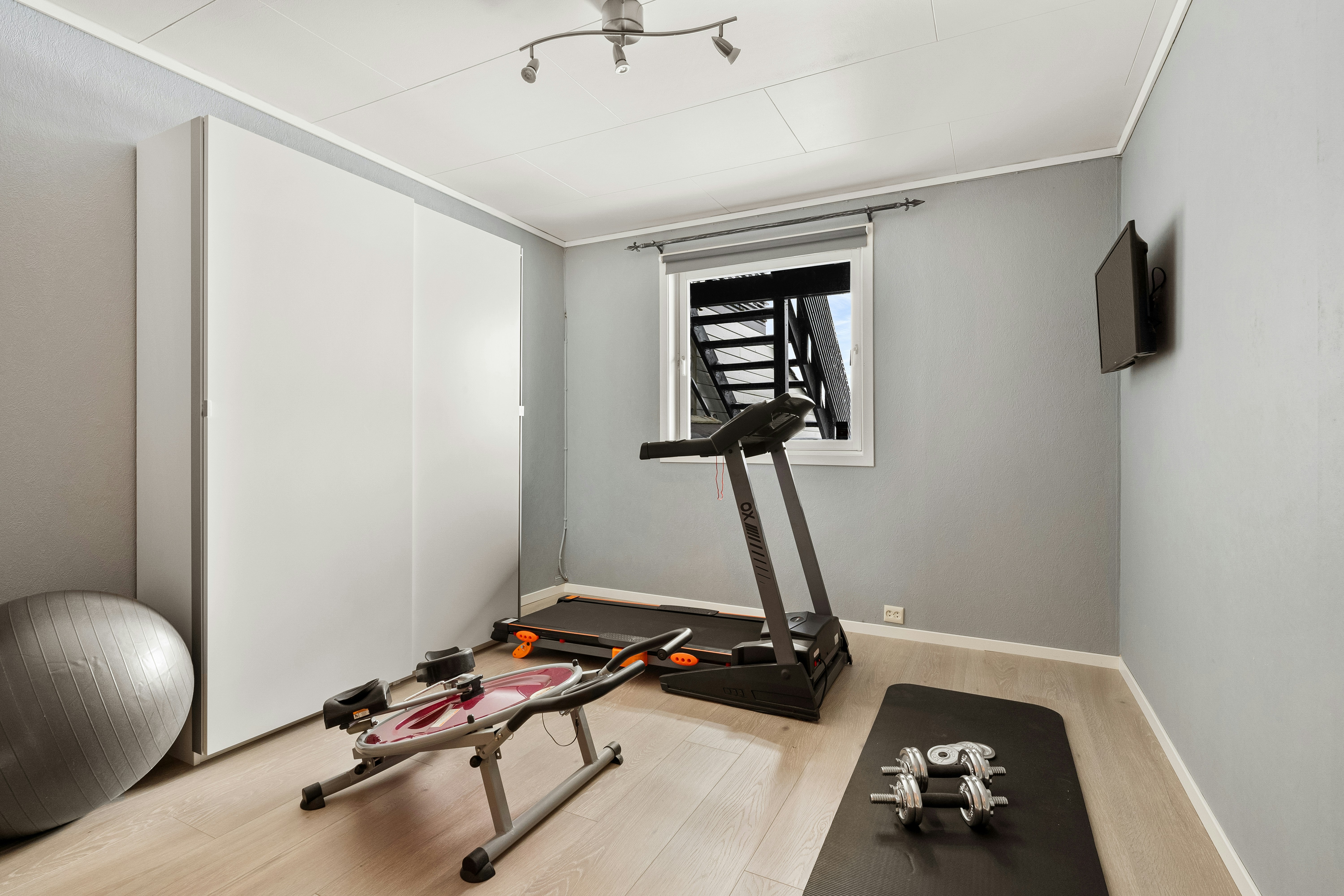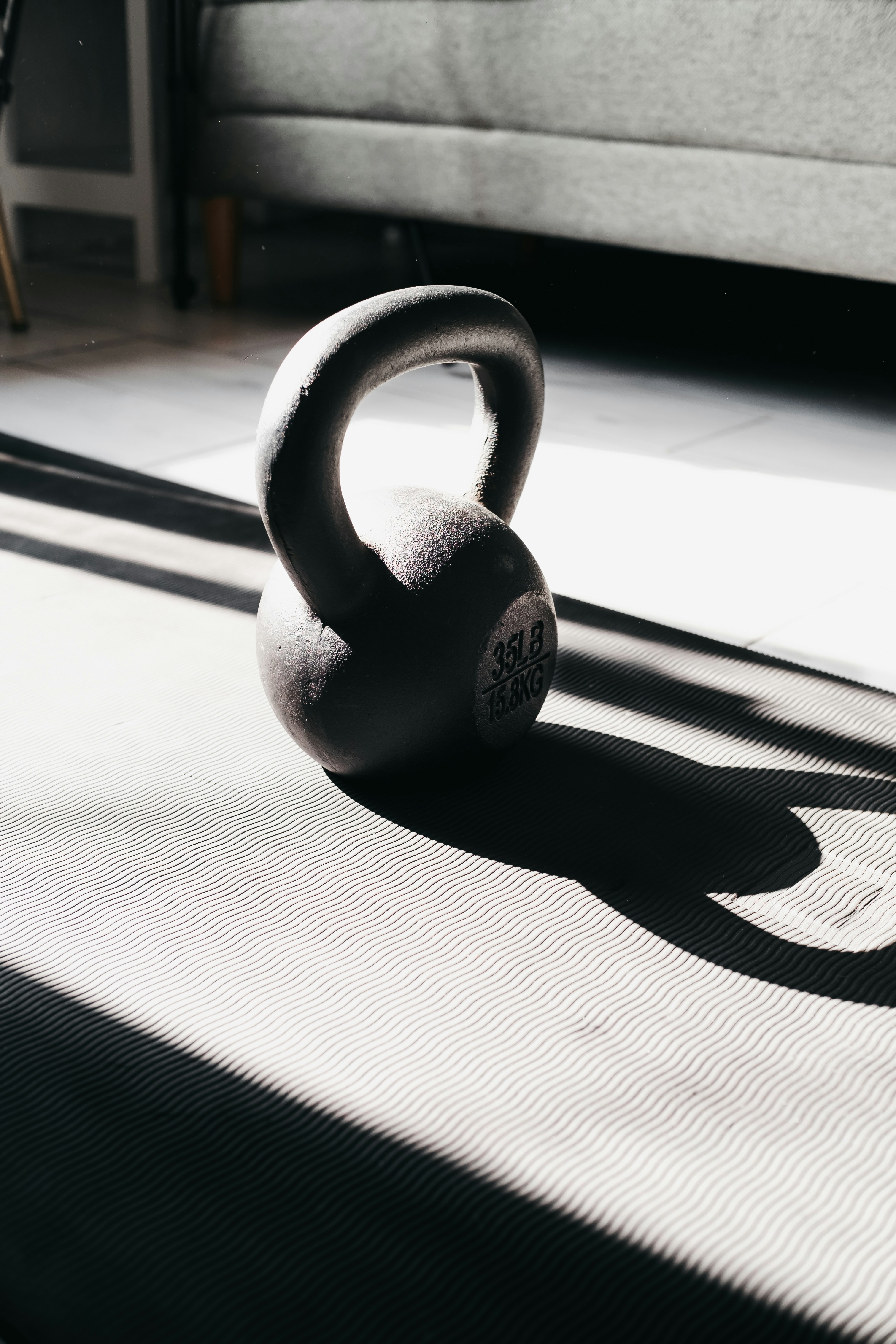
Most apartment fitness advice assumes you have a room to dedicate, even a small one. A studio doesn't work that way -- your workout space is your living room, your bedroom, and sometimes your kitchen, all at once, with nowhere to hide equipment behind a closed door. That changes the actual priorities: visibility and multi-use matter as much as size.
The core difference from a 1-bedroom setup
In a 1-bedroom, equipment can live behind a closed door and only needs to look "fine" for a few minutes a day. In a studio, everything is visible constantly -- to you, to guests, to a date who comes over. This isn't about vanity; it's a real factor in whether the space feels livable the other 23 hours a day you're not working out.
This means visibility and dual-purpose design matter as much as raw storage footprint. A folding bench that disappears behind a door is great in a 1-bedroom. In a studio, something that looks intentional even when set up -- like an ottoman that hides bands, or a rack that folds flush against the wall -- earns its keep twice.
The studio-specific equipment priority list
Prioritize equipment that either fully disappears or looks acceptable sitting out. Adjustable dumbbells in a low, unobtrusive stand beat a visible rack of fixed weights. A rolled exercise mat leaning in a corner reads as intentional decor more than gym equipment left out.
Deprioritize anything that only works well fully set up and visible for long stretches -- a permanently assembled bench, for example, competes directly with your living space in a way it wouldn't in a dedicated room.
Genuinely favor multi-purpose furniture over dedicated gym furniture. A storage ottoman that holds bands and a foam roller, and doubles as actual seating, solves two problems with one purchase -- exactly the kind of solution a studio rewards more than a larger apartment does.
A realistic studio equipment list
Adjustable dumbbells, stored in a low corner tray rather than a visible rack.
A rolled exercise mat, leaning against a wall or in a closet -- visually minimal even left out.
Resistance bands and a jump rope, kept in a drawer or a storage ottoman.
A doorway pull-up bar, installed only when in use and removed after -- genuinely zero visual footprint the rest of the time.
This is a smaller list than a 1-bedroom or house setup might reasonably include, and that's the point -- a studio rewards a tighter, more curated equipment list over trying to replicate a bigger space's setup in less room.
Layout thinking for a studio specifically
Rather than a fixed "gym corner," think in terms of a flexible zone that can host a workout and then fully reset to living space afterward. This might mean floor space near a window that's otherwise unused furniture-wise, cleared for 20 minutes, then returned to normal.
This is a different mental model than the 6x6 corner setup covered elsewhere on this site, which assumes a semi-dedicated spot. A studio often does better with a fully flexible zone rather than a permanently claimed one.