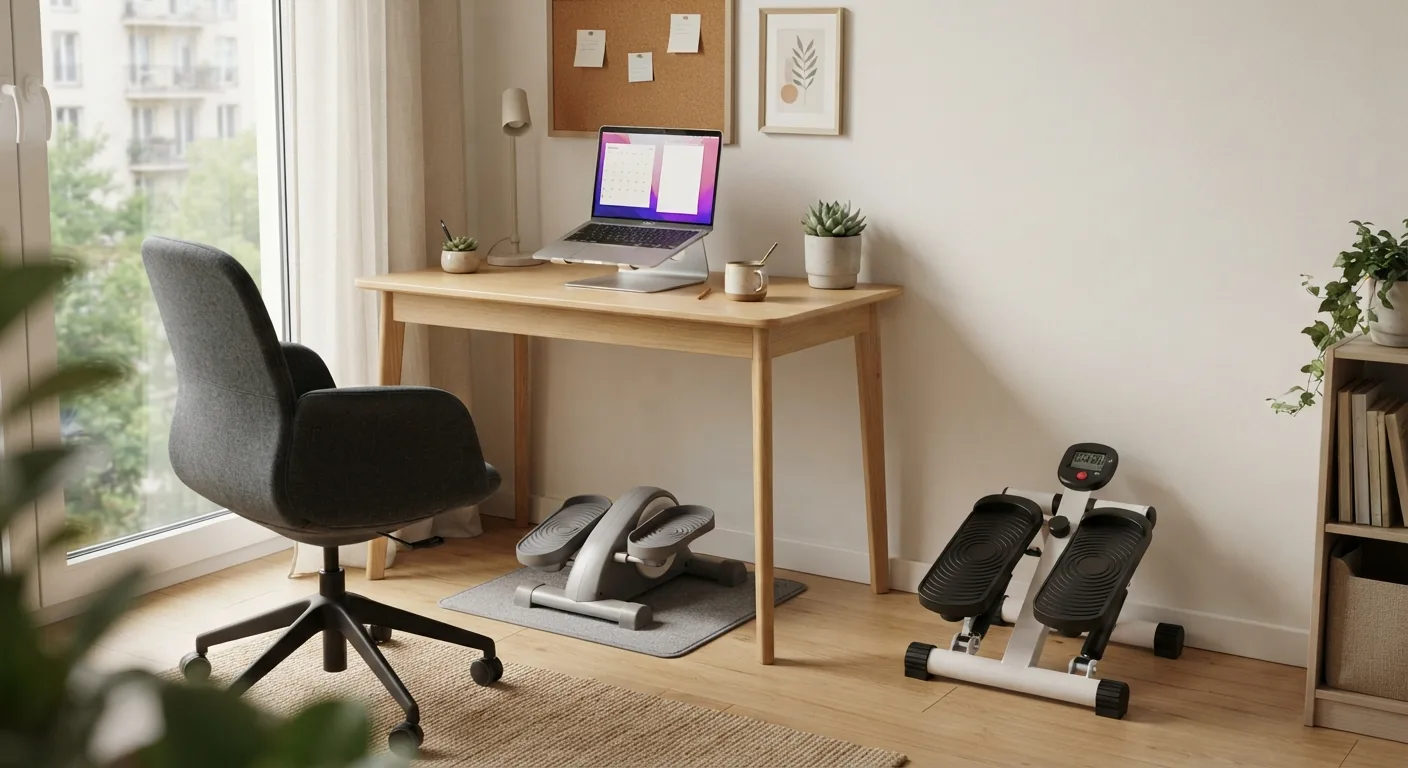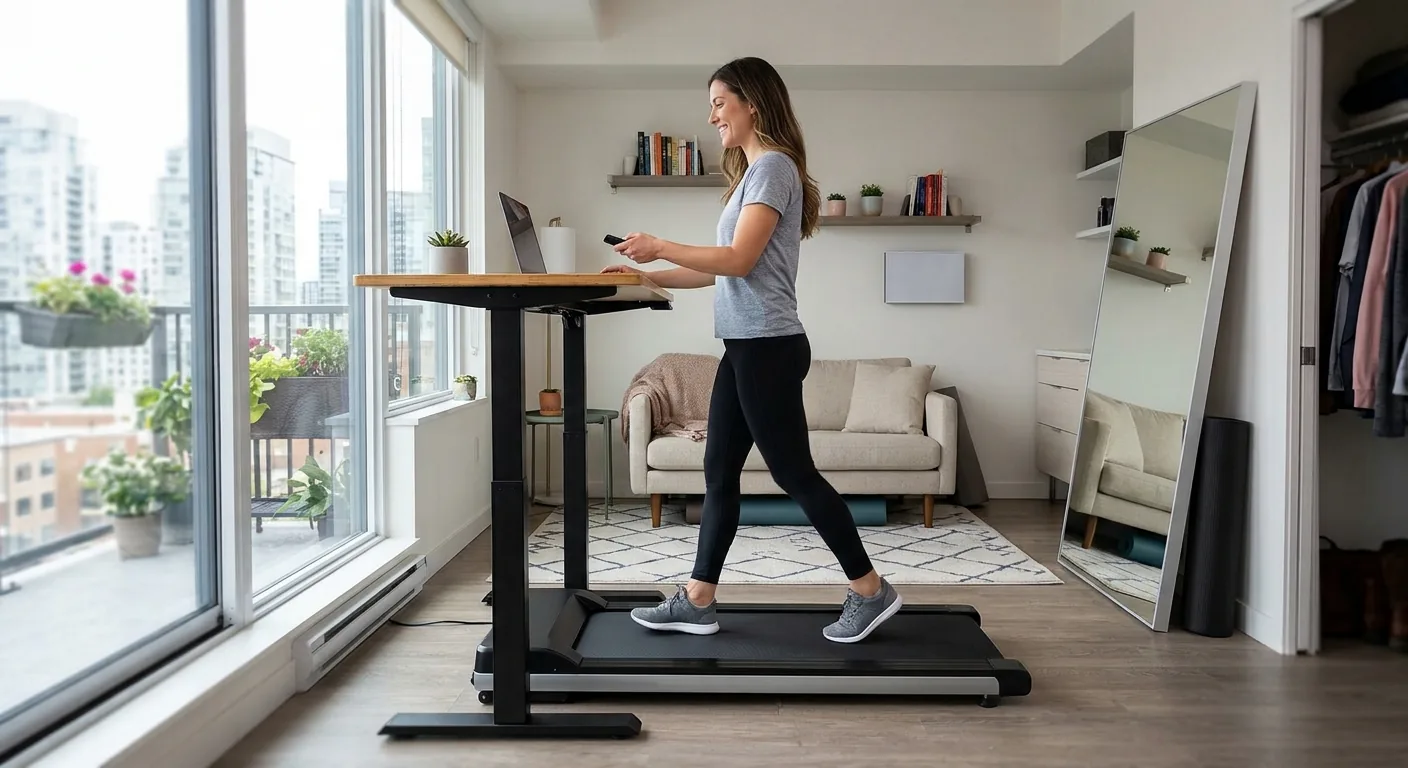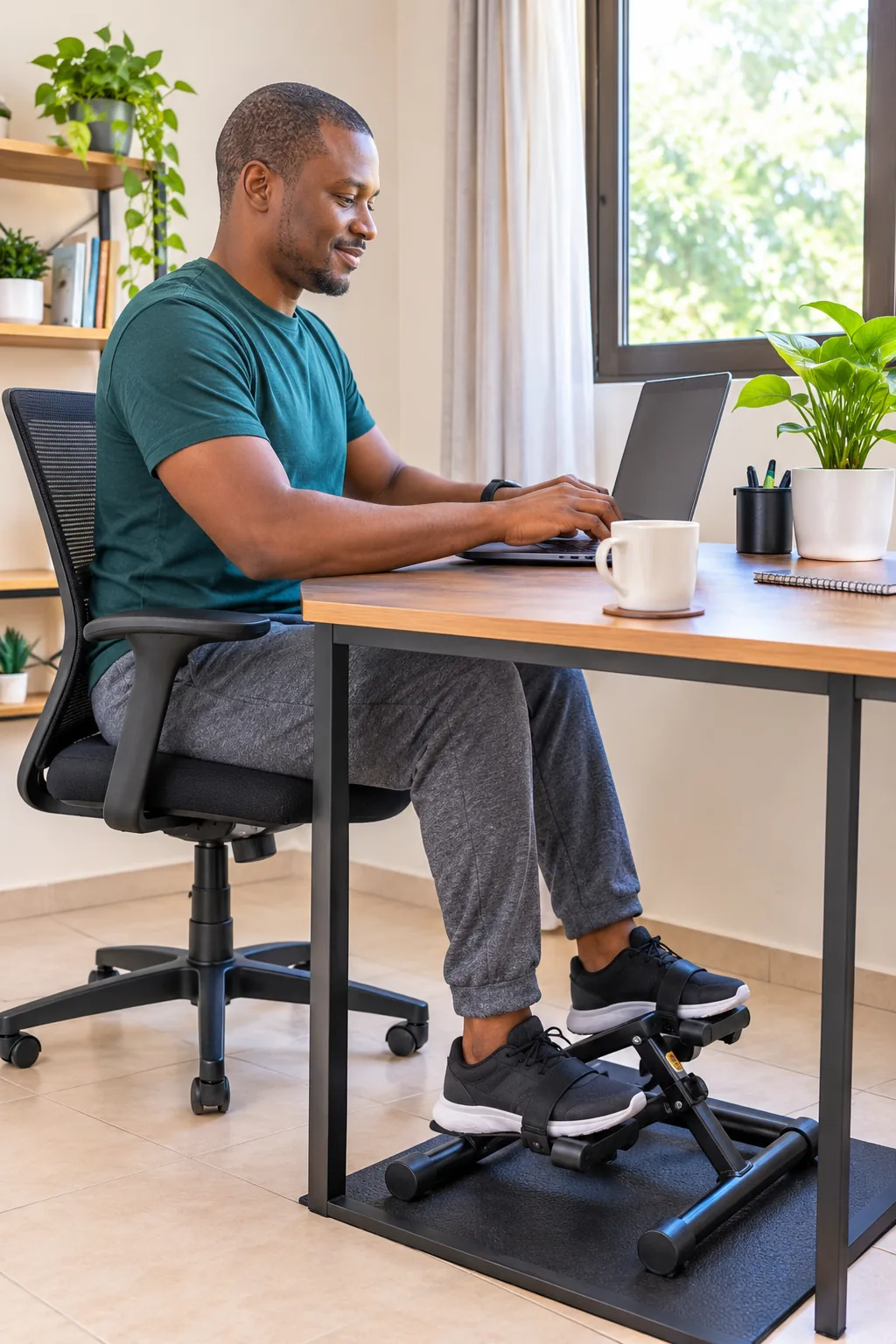
If you work from a small apartment, your home office and your workout space are probably fighting over the same ten square feet — and most cardio equipment loses that fight before it even gets unboxed. A treadmill needs clearance you don't have. A stationary bike needs a spot to live when you're not on a call. An under-desk pedal exerciser needs neither: it lives under the desk you already own, in the square footage you're already using eight hours a day. Worth being honest about upfront: pedaling under your desk is not a cardio workout. It's what exercise physiologists call NEAT — non-exercise activity thermogenesis, the background movement that adds up over a full day of otherwise sitting still. It won't replace a real training session, and any claim promising a large, specific calorie burn from desk pedaling alone is rounding up. What it actually does is turn eight sedentary hours into eight hours with blood moving, which matters more than people expect once you're doing it daily instead of occasionally. Below are two real picks that solve genuinely different problems: one built for daily movement and a real calorie-burn nudge, one built to be quieter and gentler for recovery days or arm work. Both fit under a standard desk, both are quiet enough for a shared wall, and neither needs a dedicated spot in a room that's already working overtime.
Quick answer: which pick, and why
If your main goal is daily movement and a real calorie-burn nudge while you work, the DeskCycle Under Desk Bike Pedal Exerciser ($159.99, 4.5★/6,018 reviews) is the stronger pick — it has the deeper, more established review history of anything in this category, and its mechanical resistance gives you real range to adjust as you get used to pedaling through calls.
If you want something quieter, gentler on the joints, and flexible enough to work your arms instead of (or in addition to) your legs — useful on a recovery day, or if you're dealing with joint sensitivity — the DeskCycle MagneTrainer ($179.99, 4.5★/1,924 reviews) is the better fit. Its magnetic resistance has no mechanical friction to speak of, which makes it both the quietest option here and the gentlest.
Neither is a replacement for real cardio or strength training. Both are genuinely useful for turning a sedentary WFH day into a less sedentary one.
- Daily desk cardio, legs only, deeper resistance range — DeskCycle Pedal Exerciser ($159.99)
- Quieter, gentler, arm-or-leg use, better for recovery days — DeskCycle MagneTrainer ($179.99)
- Both fit under a standard desk and need no dedicated floor space
Comparison table
| Product | Resistance Type | Best For | Price |
|---|---|---|---|
| DeskCycle Under Desk Bike Pedal Exerciser | Adjustable mechanical | Daily desk cardio, legs only | $159.99 |
| DeskCycle MagneTrainer Mini Exercise Bike | Adjustable magnetic | Quiet recovery, arms or legs | $179.99 |
Details above are editorial summaries and approximate street prices at the time of writing — confirm specifics on each current listing.
Why this is one of the few cardio categories that actually works in a shared-wall apartment
Most cardio equipment runs into the same two walls, literally and figuratively, that strength equipment does in an apartment: footfall or impact noise, and a footprint that needs to live somewhere when you're not using it. A treadmill or an elliptical both generate real vibration through a floor — exactly the kind of noise a downstairs neighbor notices, and exactly the category that consistently ranks as the loudest equipment on this site.
An under-desk pedal exerciser sidesteps both problems by design. There's no footfall, because your feet never leave the pedals. There's no separate footprint, because it lives in the same spot your desk chair already occupies. And because both products here use a seated pedaling motion rather than a standing one, there's essentially no vibration transmitted through the floor at all — a genuinely rare thing to be able to say about any piece of cardio equipment in this size range.
Desk height, clearance, and the adjustment most people get wrong
The single most common mistake with any under-desk pedal exerciser isn't the product — it's the desk. Standard desks sit around 28-30 inches high, and a pedal exerciser's pedals typically clear the floor by roughly 6-8 inches at the top of the stroke, which means your chair height and seat position matter as much as the product you buy. Sit too low, and your knees drive up into the underside of the desk on every rotation. Sit too high or too far back, and you lose the smooth, continuous motion that makes the whole thing worth doing in the first place.
This is exactly why the DeskCycle Pedal Exerciser is worth paying the extra $10 for the Adjustable Height version over the Standard: if your desk and chair combination doesn't land in the ideal range on the first try — and for most people it doesn't — an adjustable base is the difference between a product you use daily and one that ends up pushed into a corner after a week. The MagneTrainer's lower, flatter profile makes this less of an issue, since it's designed to work equally well on the floor for legs or set on the desk itself for arms.
A quick way to check before you buy: sit at your desk the way you normally do, and measure the clear vertical space between the floor and the underside of your desk surface at your feet. Anything under about 7 inches is going to be tight for either product.
Choosing between daily cardio and gentle recovery — and why pairing both makes sense for some people
The real decision here isn't which product is "better" — it's which problem you actually have. If you're starting from zero movement during the workday and want the most direct calorie-burn and cardio benefit, the Pedal Exerciser's deeper mechanical resistance range gives you more to work with as your legs adapt, and its review history (over 6,000 ratings) makes it the safer first purchase if you're only buying one.
The MagneTrainer earns its place for a narrower but real use case: days when your legs are already worked from an actual training session and you want gentle circulation instead of more load, joint sensitivity that makes higher-resistance pedaling uncomfortable, or simply wanting to work your arms during a call instead of your legs. A low-intensity, joint-friendly recovery routine leans on exactly this kind of gentle movement, and the MagneTrainer is a reasonable equipment-based complement to it on a day you don't want to get on the floor.
Buying both isn't redundant if you actually have both use cases — alternate which one lives under the desk based on whether today is a push day or a recovery day. If you only want one, match it to which problem is actually yours: more movement, or gentler movement.
What this won't replace, and when to skip it entirely
Be honest with yourself about what this is solving. Pedaling under a desk is genuinely good at turning sedentary hours into less-sedentary hours — it is not a substitute for a real strength or cardio training session, and nobody should expect it to meaningfully change their fitness the way an actual workout would. If your goal is fitness progress rather than reducing how sedentary your workday is, your time is better spent on a dedicated session than hoping desk-pedaling adds up to one.
There's also a real population this isn't for: if you have a knee, hip, or circulatory condition, check with a doctor before adding repetitive pedaling to your day, same as you would before starting any new repetitive-motion activity. Neither product here is a rehabilitation device, even though the MagneTrainer is sometimes marketed toward gentle joint mobility.
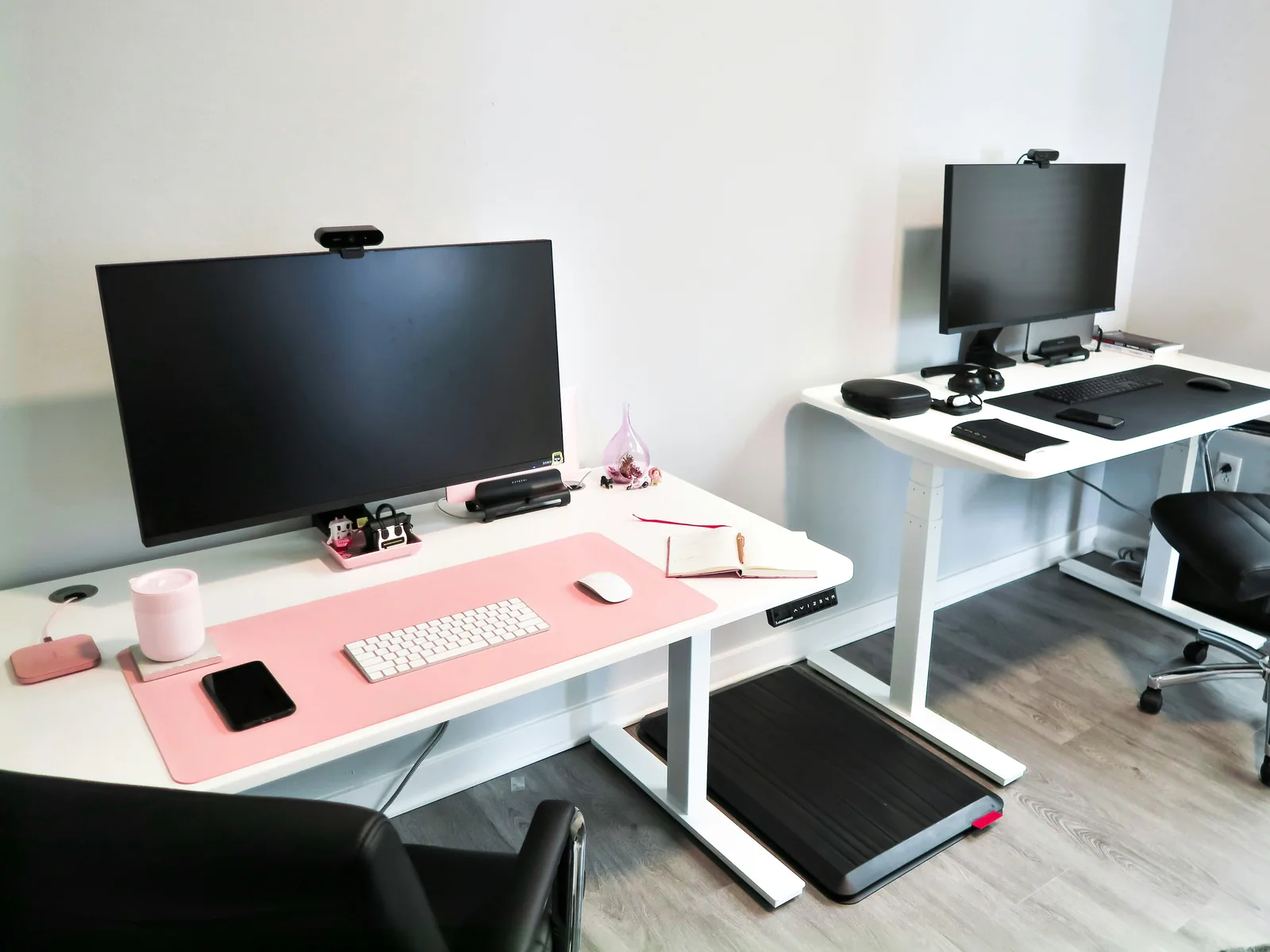
If your home office and home gym already share one room, this is a natural next step after making the space work in the first place — our guide to sharing one room between your home office and your home gym covers the setup side (camera framing, noise during calls, mental transition cues) that a product alone doesn't solve.