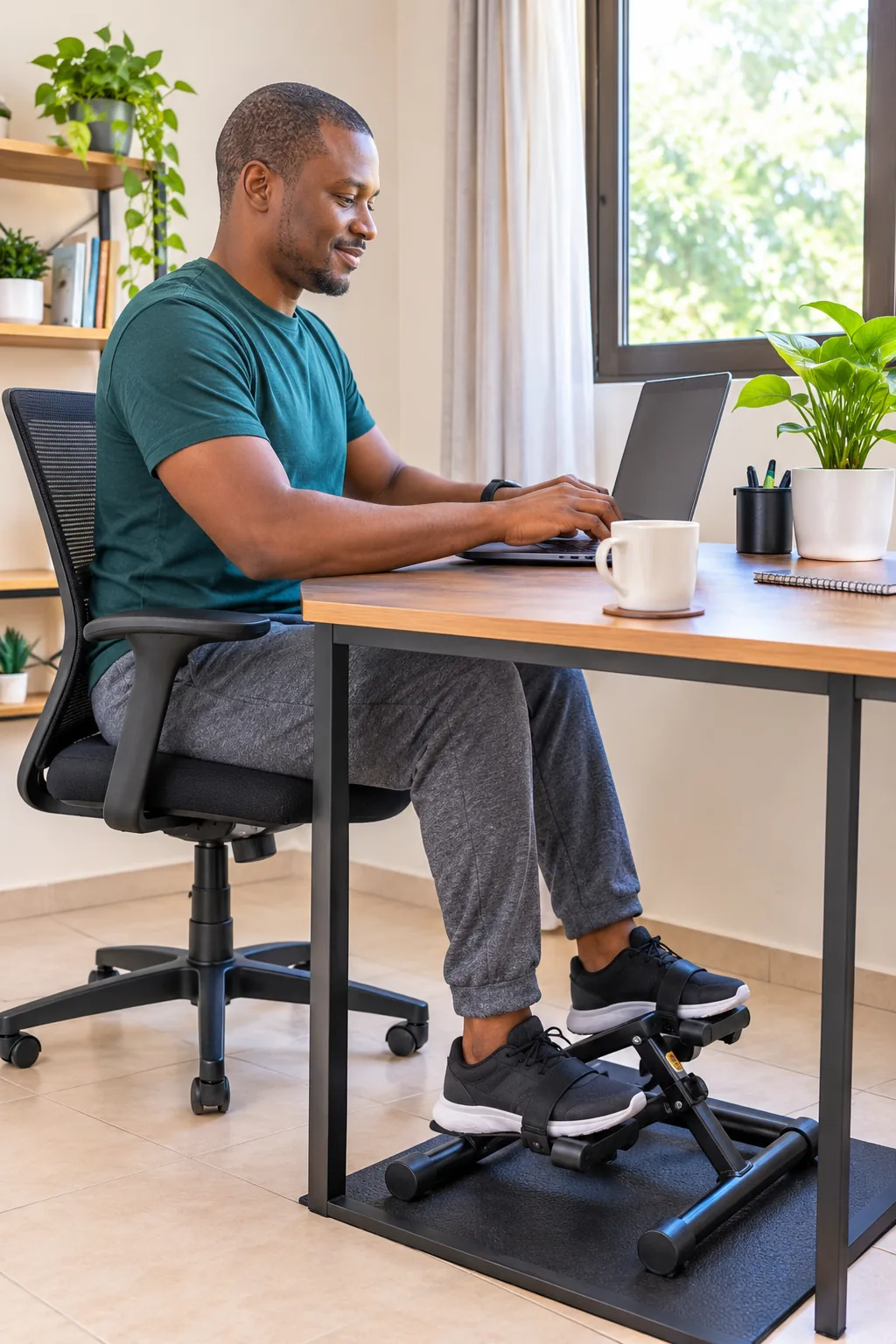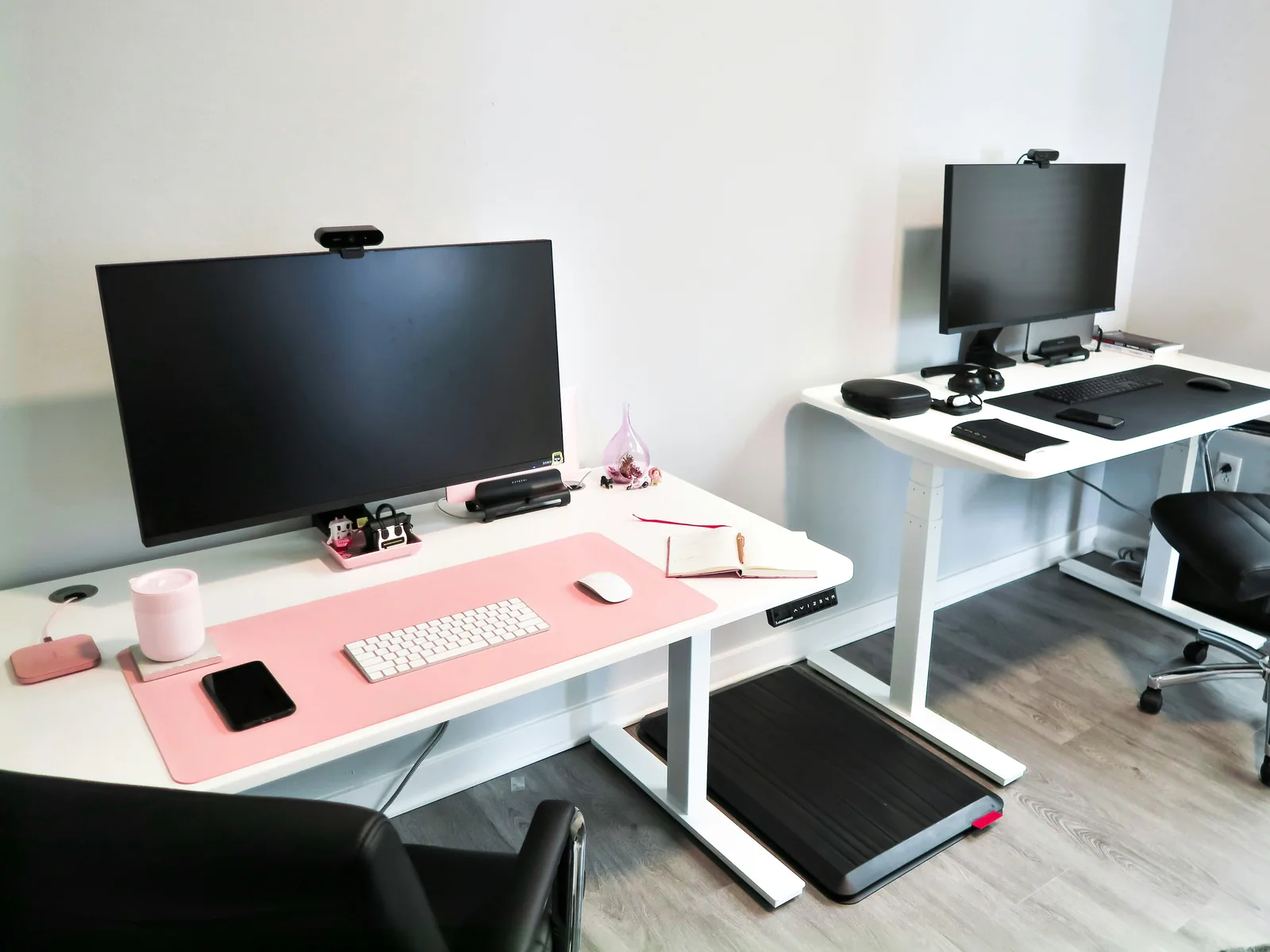
Most home gym advice assumes you have a room to dedicate, or at least a corner nobody else needs during the day. If you work from home, that corner is already spoken for -- it's where your desk, your monitor, and your 10am stand-up already live. A kettlebell on the floor behind you isn't just clutter anymore; it's something a coworker might see on a call, something you might trip over reaching for a water bottle mid-meeting, something that turns "go work out" into a 15-minute negotiation with your own living space. None of that means it can't work. It just means the actual obstacles are different from the ones most apartment-gym advice is written for -- less about square footage, more about sharing one room between two very different modes of being in it.
Quick answer
Yes, one room can genuinely do both jobs -- but the three real obstacles are timing around meetings (not space), keeping equipment out of your video call background, and building an actual mental switch between "work mode" and "workout mode" when both happen in the same four walls. Solve those three and the square footage mostly takes care of itself.
The calendar problem, not the space problem
A loaded dumbbell or a rowing machine seat clunking down mid-call is a real risk when your desk and your equipment share drywall, not just a room. Treat your calendar like you'd treat a downstairs neighbor: block the loud stuff (jump rope, dropped weights, anything with impact) for windows you know are clear, and keep anything quiet -- resistance bands, bodyweight work, stretching -- as the fallback for days when your schedule is unpredictable. The flip side most space-constrained advice misses entirely: working from home also means you can train in windows a commuting coworker simply doesn't have. A 20-minute session between a 10am and 11am meeting, with zero commute eating into either end, is a real advantage this setup gives you that a traditional office job doesn't.
- Block loud movements for windows you know have no calls nearby
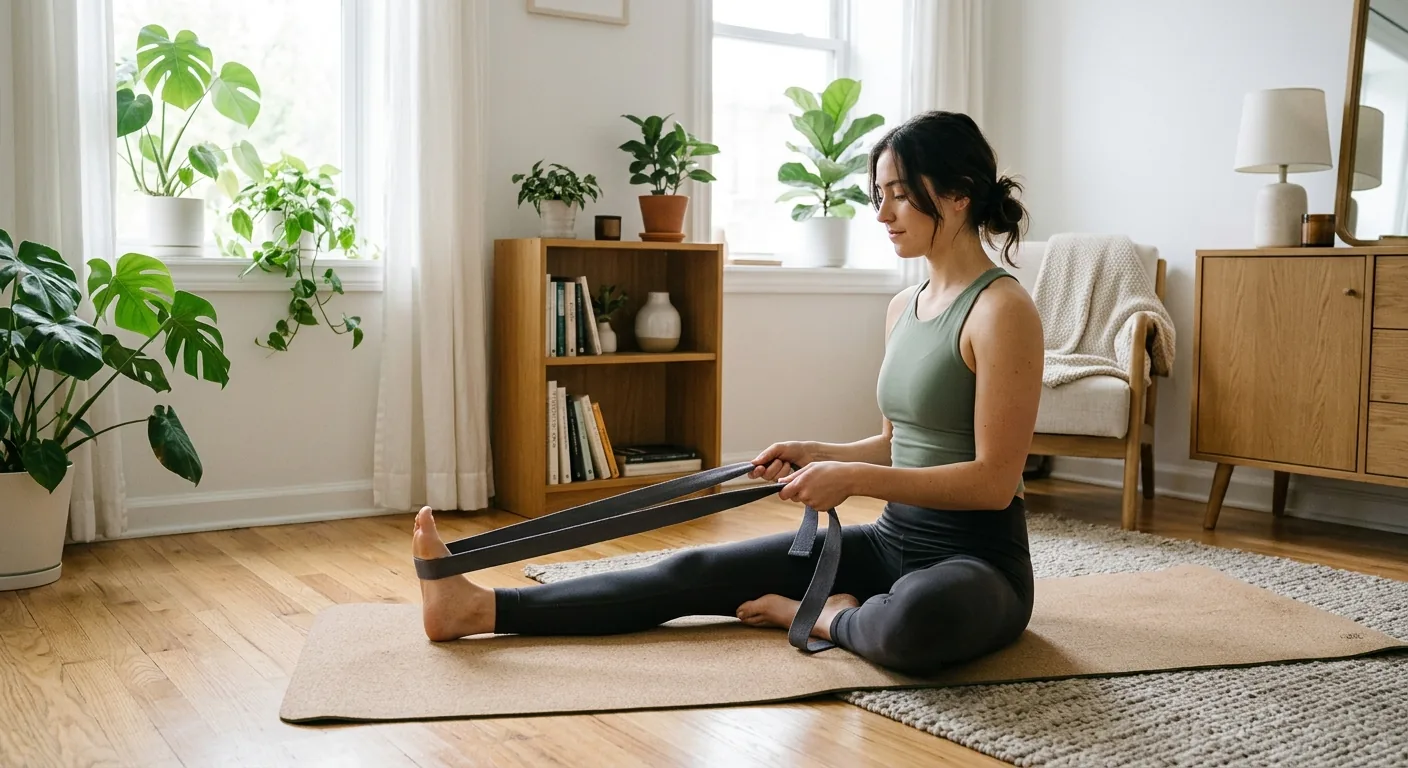
- Default to quiet equipment on unpredictable days -- see our guide on exercising quietly in an apartment
- A free midday gap is a real scheduling advantage, not just a space compromise
Keeping gear out of your Zoom background
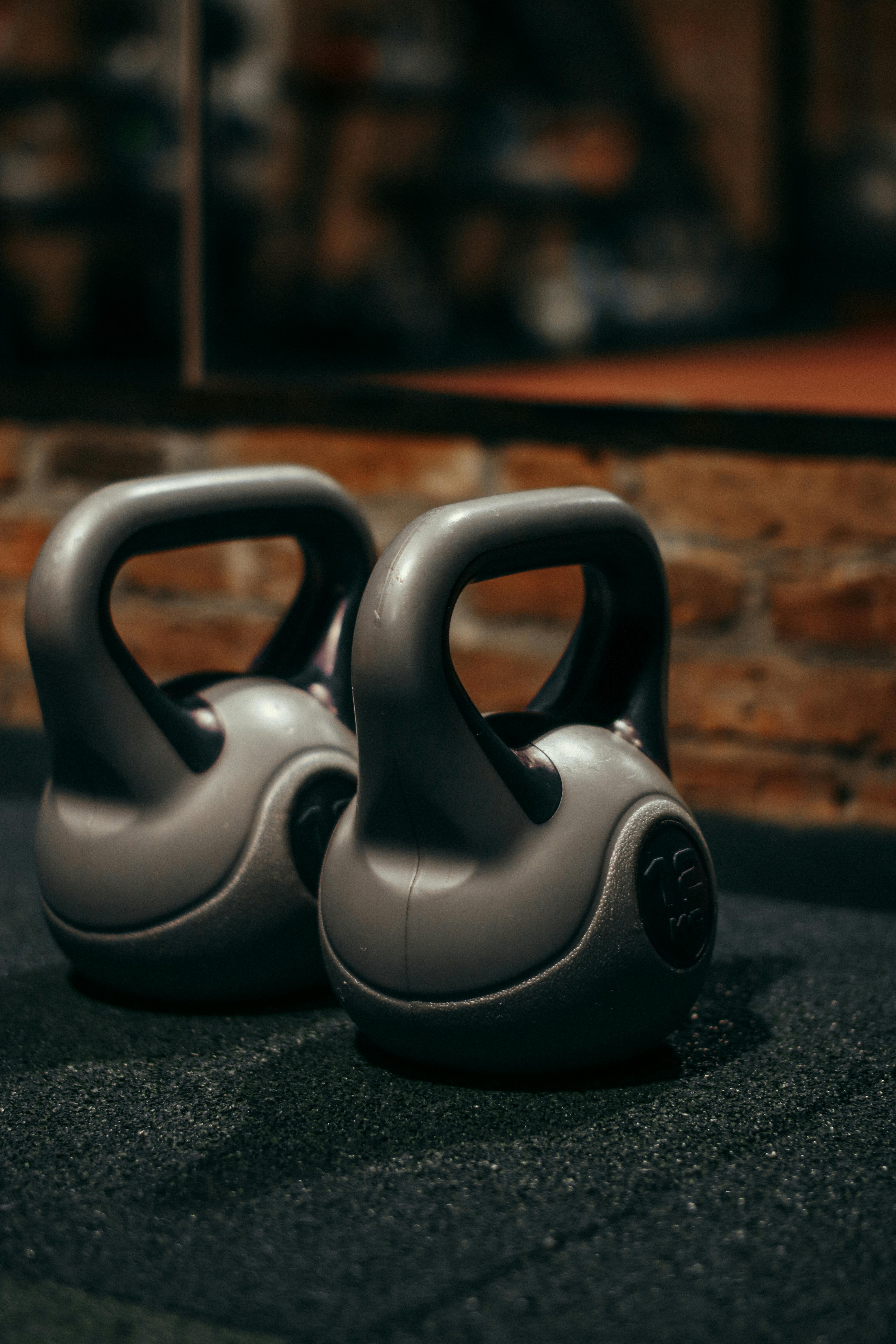
A kettlebell in frame during a client call reads differently than one in frame during a video chat with a friend -- fair or not, visible gym equipment behind you can come across as less put-together in a professional context. You don't need a second room to fix this, just a consistent camera angle and a few minutes of setup. Position your desk so your camera faces a wall, a bookshelf, or anything that isn't your equipment corner -- even in a studio, most rooms have at least one angle that keeps gear out of frame. A cheap curtain, a folding screen, or even a tall plant positioned deliberately can do the same job if your only camera angle happens to face the gear.
- Face your desk/camera toward a wall or shelf, not your equipment corner
- A folding screen or curtain is a cheap fix if no angle works
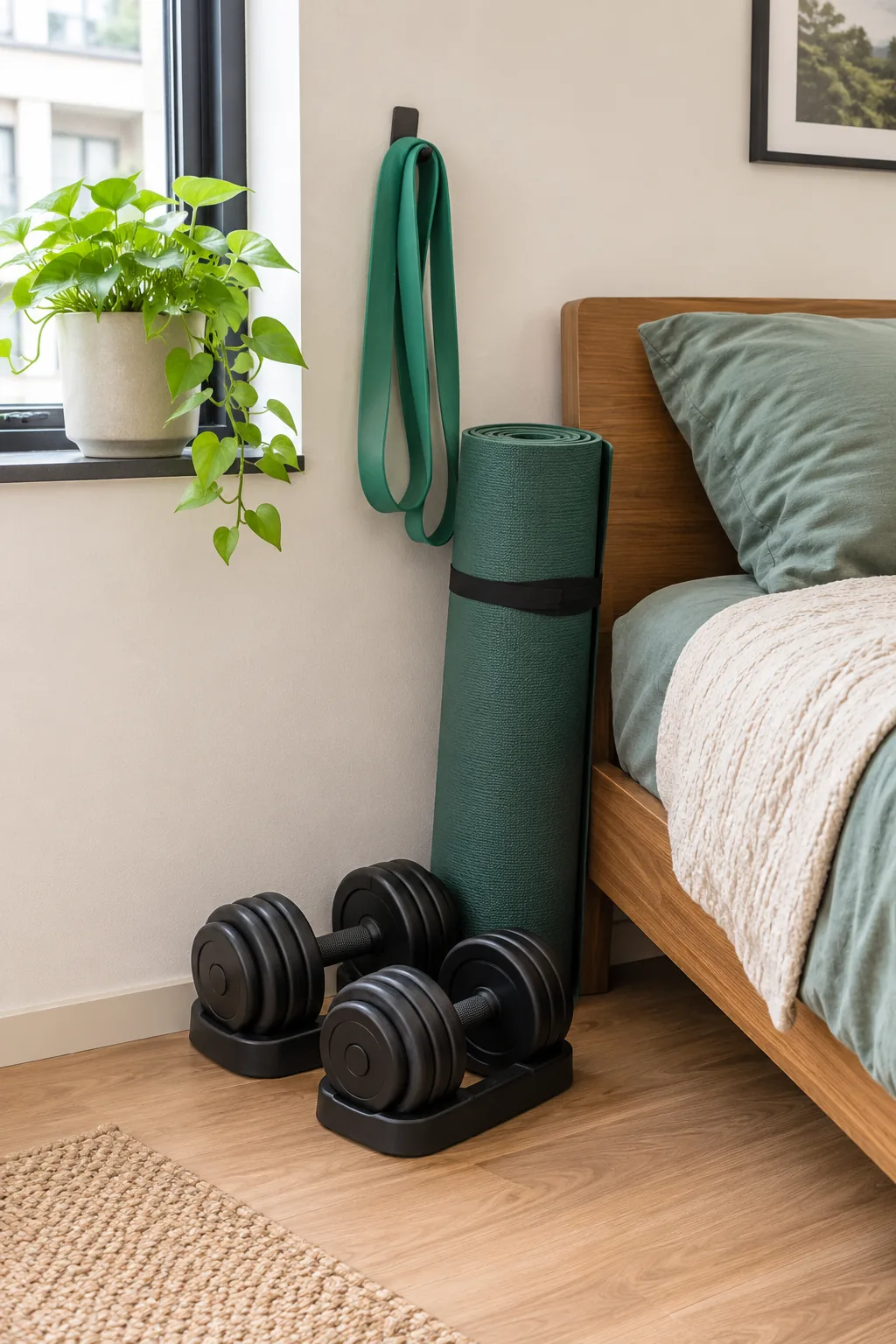
- Storage that gets gear out of sight between sessions solves this and the tripping-hazard problem at once
Actually leaving "work mode" when work is six feet away
The hardest part isn't physical, it's mental. Walking to a separate gym, or even a separate room, gives your brain a real transition cue -- closing a laptop and turning around in the same four feet doesn't. A few small, repeatable habits can substitute for that missing transition: change your shoes even if you're not leaving the room, physically close or turn the laptop screen away before starting, and always face a different direction to work out than you do to work. These sound small, but they're the same principle as a "commute" -- a deliberate boundary your brain learns to recognize, built out of consistent small actions instead of distance.
- Change shoes or clothing even if you're staying in the same room
- Close or turn away your laptop screen before starting -- don't just minimize it
- Face a different direction to work out than you do to work
If the overlap genuinely isn't working
Be honest with yourself if equipment sitting six feet from your desk is becoming a source of guilt rather than motivation -- a kettlebell you see all day but never use is worse than no kettlebell at all. If that's happening, the fix isn't necessarily more willpower, it's fully hiding the equipment between sessions (not just angling a camera around it) so it stops being a constant, low-grade reminder of something you're not doing. A studio apartment with no separate room at all faces this exact tension in its most extreme form, and the same hide-it-fully logic applies there too.
- Constant visible gear you're not using breeds guilt, not motivation
- Fully hiding equipment between sessions beats just camera-angling around it
- Related reading: setting up a home gym with no separate room at all