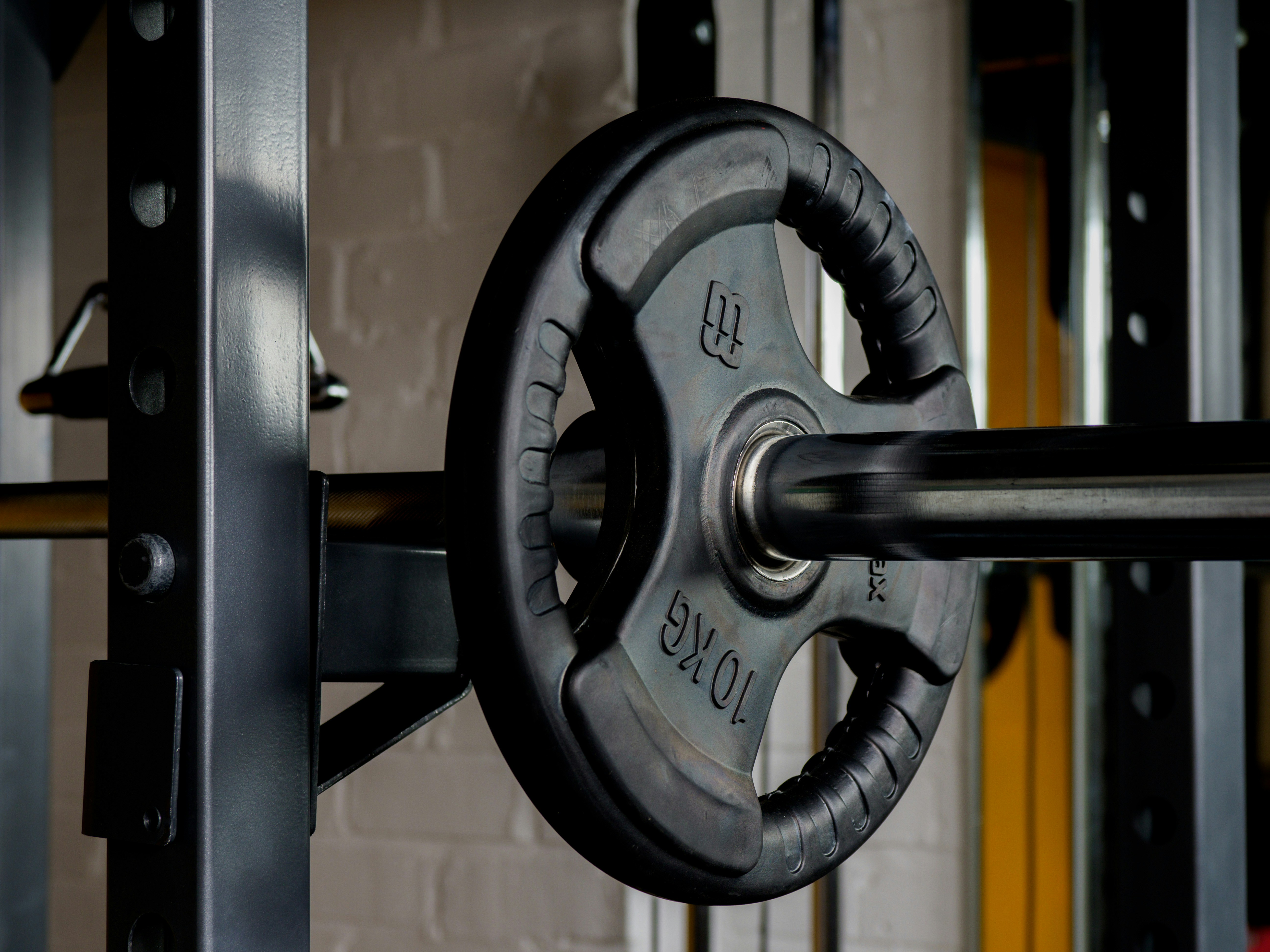
A squat rack is the one piece of equipment on this site that doesn't fold into a drawer, roll under a bed, or disappear when you're done with it — even the "foldable" versions still need a permanent spot on a wall. Before deciding whether that trade-off is worth it, it's worth being specific about what a rack actually asks of an apartment, because "do I need a squat rack" and "do I need to lift heavier than dumbbells allow" are two different questions that get conflated constantly. This is the same honest decision-guide format we used for whether you need a weight bench and whether a cable machine is worth the space — the goal here isn't to talk you into or out of a rack, it's to give you the actual numbers so you can answer it yourself.
What a squat rack actually asks of your apartment
A squat rack is the biggest single commitment most people consider for a home gym, and it's worth being honest about what "biggest" means before getting into whether you need one. A standard half rack or power rack runs roughly 4x4 feet of permanent footprint at minimum, plus working clearance in front for the actual squat or bench — call it 8x6 feet total once you account for stepping back with a loaded bar. That space doesn't fold away between sessions the way a resistance band or adjustable dumbbell does.
Ceiling height matters more here than almost anywhere else on this site. If you want a pull-up bar integrated into the rack (most people do), you need enough clearance above the top of the rack for a full hang without your feet touching the floor — figure 9+ feet of ceiling for someone of average height, which rules out a lot of apartments with standard 8-foot ceilings unless the rack sits in a spot without a pull-up bar attachment.
Then there's the noise most people don't think about until they've already installed one: re-racking a loaded barbell, even carefully, produces a metal-on-metal clank that travels through a floor far more than most cardio equipment does.
When you genuinely need one
A rack earns its footprint when you're doing progressive barbell training — squats, bench press, or overhead press with weight that increases over time and eventually exceeds what you can safely lift on and off the floor without a spotter or safety bars. That's specifically a strength-training pattern, not a general fitness one. If your training is built around getting stronger on those three lifts specifically, nothing else on this site substitutes for a rack's safety bars.
A rack also makes sense if you specifically want an integrated pull-up bar and don't have another way to mount one — though our guide to no-drill pull-up bar options is worth checking first, since a doorway or freestanding bar solves that single need for a fraction of the space and cost.
When you don't
Most home gym users training with dumbbells, kettlebells, resistance bands, or bodyweight work never approach the weight where a spotter-free barbell squat becomes a safety issue — a rack solves a problem they don't have yet. If you're not yet squatting or benching with a barbell at all, buying a rack ahead of that need means carrying an 8x6 foot permanent footprint for months or years before it earns its space.
Renters face an additional constraint worth naming directly: most racks that don't bolt to a wall stud or the floor lose real stability under heavy load, and many leases restrict exactly that kind of permanent installation — see our guide on what landlords actually care about before assuming this is off the table entirely.
The foldable and wall-mounted alternative
Foldable and wall-mounted racks exist specifically to answer the apartment version of this problem, and they're a genuine middle ground rather than a compromise — models like the PRx Profile ONE, Titan T-3, and REP PR-4100 fold flat against a wall when not in use, taking the footprint down to a few inches deep.
The honest trade-off: they still need to be mounted into wall studs, which is the same permanent-installation problem renters run into with a standard rack, just distributed across a wall instead of the floor. They also still require the same working clearance in front when unfolded and in use — folding solves storage, not the space you need mid-set, which is the same distinction we've made about "foldable" equipment generally. And one nuance worth knowing if you're comparing rack ecosystems: the PRx Profile ONE and Profile PRO use different attachment specs, so a cable pulley or dip attachment bought for one won't necessarily fit the other — worth checking before buying into either separately from a rack.
What to use instead if you don't need one
If you landed on "not yet" after the sections above, that's not a consolation prize — it's most people's actually correct answer for now. Adjustable dumbbells cover the vast majority of strength training without ever needing safety bars. A suspension trainer adds bodyweight-loaded pressing and rowing variety in a setup that stores in a drawer. Resistance bands cover accessory and rehab-style work a rack was never going to help with anyway. None of these ask for a permanent 8x6 foot commitment before you've even confirmed you'll stick with a barbell program.