You roll your mat out between the couch and the TV stand, get into your first downward dog, and your heel is already touching the coffee table leg. This is usually the moment people decide their apartment "isn't set up for yoga" — when really, they just picked the wrong 6 square feet of it. Yoga and Pilates show up on every "workouts for small apartments" list, usually with zero detail beyond "just need a mat." That's true in the sense that a phone "just needs a battery" — technically correct, practically useless. A yoga mat is 24 inches wide. Your body, moving through a sun salutation, is not. This article covers the actual space math: how much floor you need for mat-based practice, how much air you need above your head, why Pilates is more forgiving than yoga, and why a reformer is one of the few pieces of home fitness equipment we'd actively talk you out of in most apartments.
The short answer
A standard yoga or Pilates mat is about 24 x 68 inches (2 ft x 5.7 ft). That is not the space you need -- it's the space you'll be lying on. The space you need also accounts for the movement around the mat.
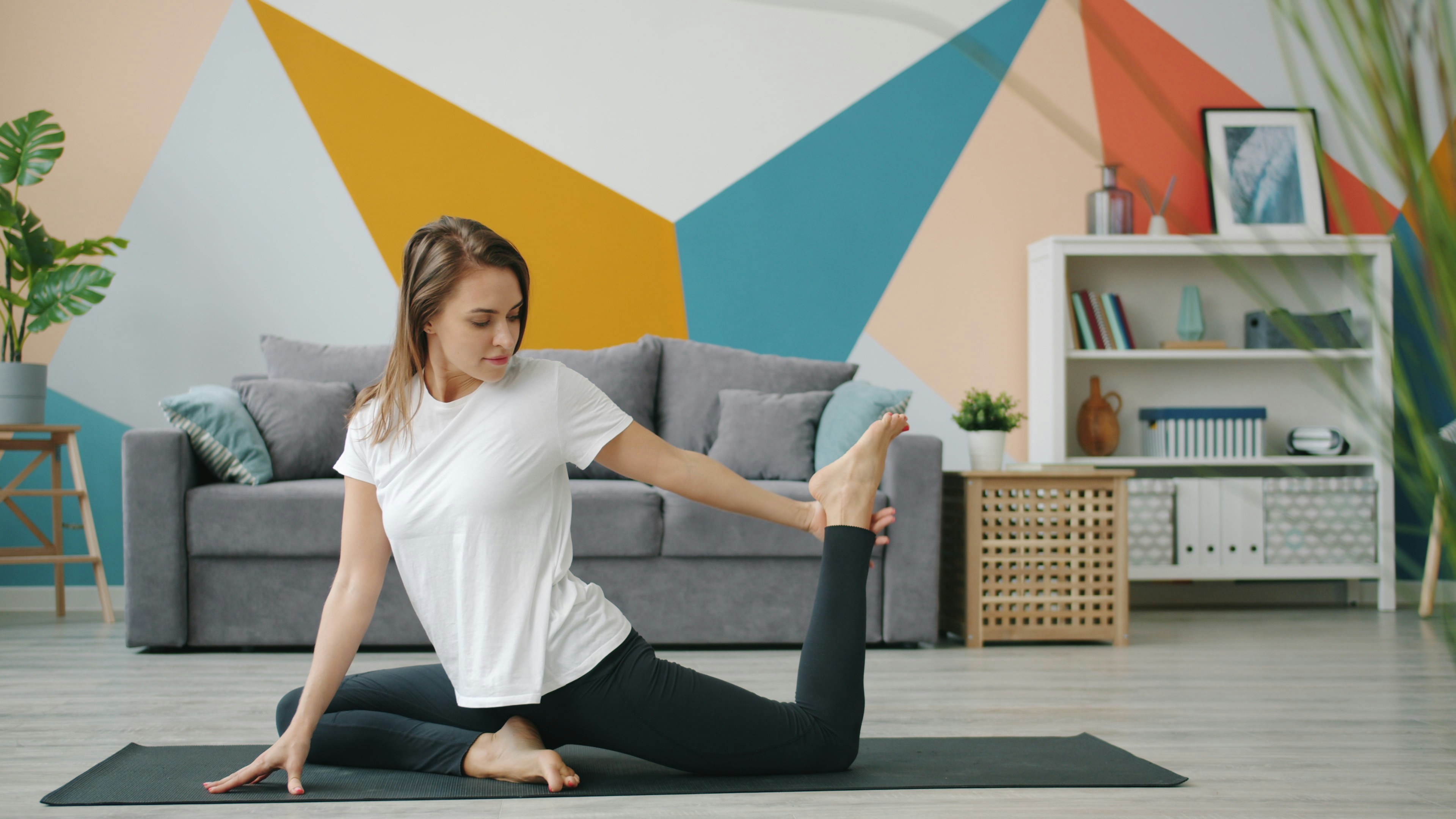
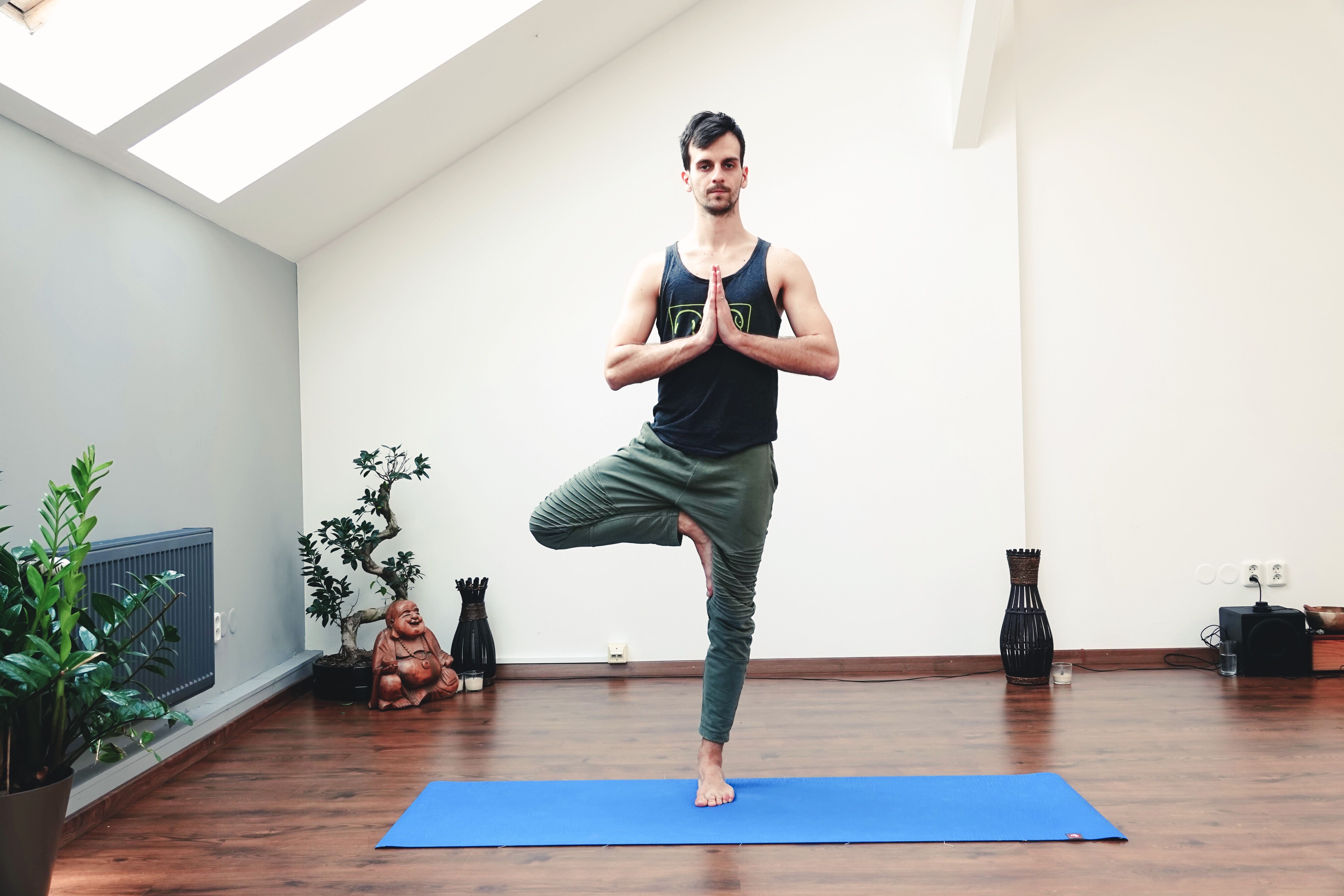
For most mat-based yoga: a clear rectangle of roughly 6 x 8 feet (48 sq ft), with at least 7 feet of ceiling clearance if you're of average height and plan to reach overhead.
For most mat Pilates: closer to 6 x 6.5 feet (39 sq ft), since Pilates rarely sends your arms or legs out sideways the way yoga does.
For reformer Pilates: roughly 8-9 feet long and 2 feet wide for the machine alone, plus 2-3 feet of clearance on the working end and both sides to get on, off, and around it safely -- realistically an 11-12 x 6-7 foot dedicated footprint. Most apartment bedrooms and living rooms can't give up that much floor permanently, which is why we don't recommend building a home practice around one unless you have a genuine spare room.
Everything below explains where those numbers come from, because "you need about 6x8 feet" is a lot more useful when you know which parts of that space actually get used and why.
Why yoga and Pilates are actually well-suited to apartments (when people give them the credit)
Every other piece of this site is preoccupied with noise, vibration, and downstairs neighbors, because that's the real constraint on apartment strength and cardio training. Mat-based yoga and Pilates mostly sidestep that problem entirely. There's no impact, no dropped weight, no motor. The loudest sound most sessions produce is your own breathing and maybe a yoga mat squeaking on a hardwood floor.
That means the actual constraint isn't "will this annoy someone downstairs" — it's simpler and more literal: do you have enough clear floor, in one contiguous rectangle, with enough air above it. That's a genuinely different planning problem than the equipment-based pieces on this site, and it's worth treating separately instead of folding it into a generic "quiet workouts" list.
Mat yoga — the real footprint, not just the mat size
The mat gives you length and width for lying down. The practice needs more than that in four specific ways:
Width beyond the mat: Poses like triangle, extended side angle, warrior II, and wide-legged forward fold put your feet 3.5-4.5 feet apart, straddling the mat rather than staying on it. If your mat is against a wall on one side, that side is off-limits for these poses unless you're comfortable with your foot planted a few inches from the baseboard. Plan for roughly 1-1.5 feet of clear floor on each long side of the mat.
Length beyond the mat: Most mats already account for lying-down length for an average adult, but forward folds, downward dog, and any pose where your arms extend past your head off the top of the mat need another 1-1.5 feet past each end. This is the dimension people underestimate most — the coffee-table-to-the-forehead problem from the intro happens here.
Turning radius: Vinyasa-style practices involve transitioning between poses that face different directions — you're not always oriented the same way on the mat. A rigid 2x6 corridor with furniture on three sides works for restorative or yin practice but gets cramped fast in a moving practice.
Put together, that's why 6x8 feet is the realistic number for most people doing an actual flow practice, not just held stretches. If your available space is closer to 6x6, you can still practice — you'll just be doing more static/held poses and fewer wide lateral ones, or turning the mat 45 degrees to use a corner's diagonal, which buys you a surprising amount of extra length in a square room.
Mat Pilates needs less than you'd think — here's why
Pilates mat work is mechanically different from yoga in a way that directly affects footprint: almost everything happens lying on your back, side, or stomach, with movement concentrated in the core and limbs moving through vertical or short arcs rather than wide lateral ones. There's no triangle pose equivalent that sends your feet 4 feet apart.
The real space demands in Pilates are overhead and around the hips, not to the sides:
Leg circles, scissors, and the hundred send your legs up and through an arc above your torso — that's vertical clearance, not floor width. A ceiling fan or low light fixture directly above your mat is a bigger problem in Pilates than a narrow room is.
Rolling movements (rollover, seal, rocking) need about a foot of clearance behind your head and past your feet for the roll itself, plus a surface with enough padding that your spine isn't grinding against hardwood — this is one case where a slightly thicker mat than the standard yoga mat genuinely helps.
Because of this, 6 x 6.5 feet is realistic for a full mat Pilates practice, and plenty of the repertoire works in less if you're doing a shorter session or a beginner-level routine that skips advanced rolling sequences.
The dimension nobody measures: ceiling height
Every space-measurement conversation on this site (see our full apartment measuring guide) focuses on floor square footage because that's what matters for equipment. Yoga and Pilates are the exception — vertical clearance matters as much as floor space, and it's the one dimension people never think to check before rolling out a mat.
Standing poses with arms overhead (mountain pose reaching up, warrior I, upward salute) need roughly your height plus 12-18 inches of clearance for a full reach without flinching or unconsciously shortening the movement. For someone 5'8", that's about 6.5-7 feet of clear ceiling — not usually a problem in a standard apartment with 8-foot ceilings, but it becomes a real constraint in a room with a sloped ceiling, a low doorway header nearby, or a ceiling fan positioned where your practice space needs to be.
This is also where inversions (headstand, shoulder stand, forearm stand) stop being a "just need floor space" activity — they need both the ceiling clearance above and a clear wall nearby if you're using one for support or safety, which most yoga content aimed at small spaces glosses over entirely.
Where reformer Pilates and apartments genuinely don't work well together
We try to be honest on this site about what doesn't fit apartment living rather than forcing a product recommendation into a category that doesn't belong there (we did the same thing with battle ropes). Reformer Pilates is a clear case.
A standard reformer is roughly 8-9 feet long and 2 feet wide, before accounting for clearance. In practice, you need space at the foot bar end to get on and off safely, and side clearance because several exercises involve your limbs or the carriage extending past the frame. That pushes the real footprint to something like 11-12 feet by 6-7 feet if you want to use it without constantly bumping furniture — closer to a small dedicated room than a corner of one.
Foldable and "apartment-sized" reformers exist, and some genuinely do fold for storage between sessions, but folding solves the storage problem, not the in-use footprint problem — you still need that full length clear while you're actually on it. If you're working with a true one-bedroom or studio footprint, a reformer is one of the few pieces of equipment we'd steer you away from by default. Mat Pilates, a set of long resistance loop bands, and a stability ball get you most of the same training effect — control, core stability, controlled range of motion — in a fraction of the space, and we've covered all three elsewhere on this site.
Finding the minimum viable space in your own place
If you've already measured your apartment using our full room-by-room guide, you likely already know your largest clear rectangle. A few practical notes specific to yoga and Pilates:
Corners are your friend. Turning a mat 45 degrees into a corner of a square-ish room often adds a foot or more of usable length compared to laying it flat against a wall, because you're using the room's diagonal instead of its shortest wall.
Furniture that can move temporarily beats furniture that's permanently out of the way. A coffee table on wheels or a rug that can be rolled back for 20 minutes is a completely reasonable setup — you don't need a dedicated yoga room, you need a repeatable 5-minute setup routine.
Under 6x6 feet, you're not out of options, you're just choosing a different practice. Restorative yoga, seated stretching sequences, and beginner Pilates mat work all function in a tighter footprint than a full vinyasa flow. The constraint changes what you do, not whether you can do anything at all — which is really the whole editorial position of this site applied to a new category.
What you actually need to buy (probably less than you think)
A mat is the one non-negotiable purchase, and we've already covered what to look for in our guide to the best exercise mats for small apartments — thickness matters more for Pilates (spine contact) than for yoga (mostly standing and balance work).
Past that, a stretching strap helps with limited-mobility yoga poses without needing a second person or a wall nearby, and a stability ball covers a lot of the same "core control" training ground as mat Pilates if you want variety. Neither is required to start.