High-intensity interval training is one of the most time-efficient ways to train, and also one of the loudest things you can do at home — jump squats, burpees, and high knees send real impact straight through the floor. The usual apartment advice is to just avoid HIIT entirely, which throws out an effective training method over a solvable problem. The actual fix is substitution: nearly every high-impact HIIT movement has a quiet version that keeps the intensity and removes the landing force. Heart rate comes from tempo and effort, not from how hard your feet hit the ground.
The real problem: HIIT and apartment living are working against each other
High-intensity interval training is one of the most time-efficient ways to train, and it's also one of the loudest things you can do in a home gym. Jump squats, burpees, high knees, jumping jacks — the exercises that make HIIT effective are exactly the ones that send impact straight through a floor to whoever lives below you.
The instinct is often to just drop HIIT entirely in an apartment. That's overcorrecting. The actual fix is substitution, not abandonment — most high-impact HIIT movements have a quieter version that keeps the intensity and drops the impact.
The physics of quiet: it's about impact, not intensity
Noise complaints from exercise almost always come from vertical impact — your body (or a weight) hitting the floor with force, sending vibration through the structure. This is a different problem than being "out of breath" loud. You can push your heart rate just as high with zero-jump movements as you can with jumping ones; the volume of noise and the intensity of the workout are not the same variable, even though HIIT culture often treats them as if they are.
This matters because it means you don't have to choose between an effective workout and a quiet one. You have to choose exercises that raise heart rate through speed, range of motion, and muscular effort rather than through landing force.
Loud exercise, quiet substitute
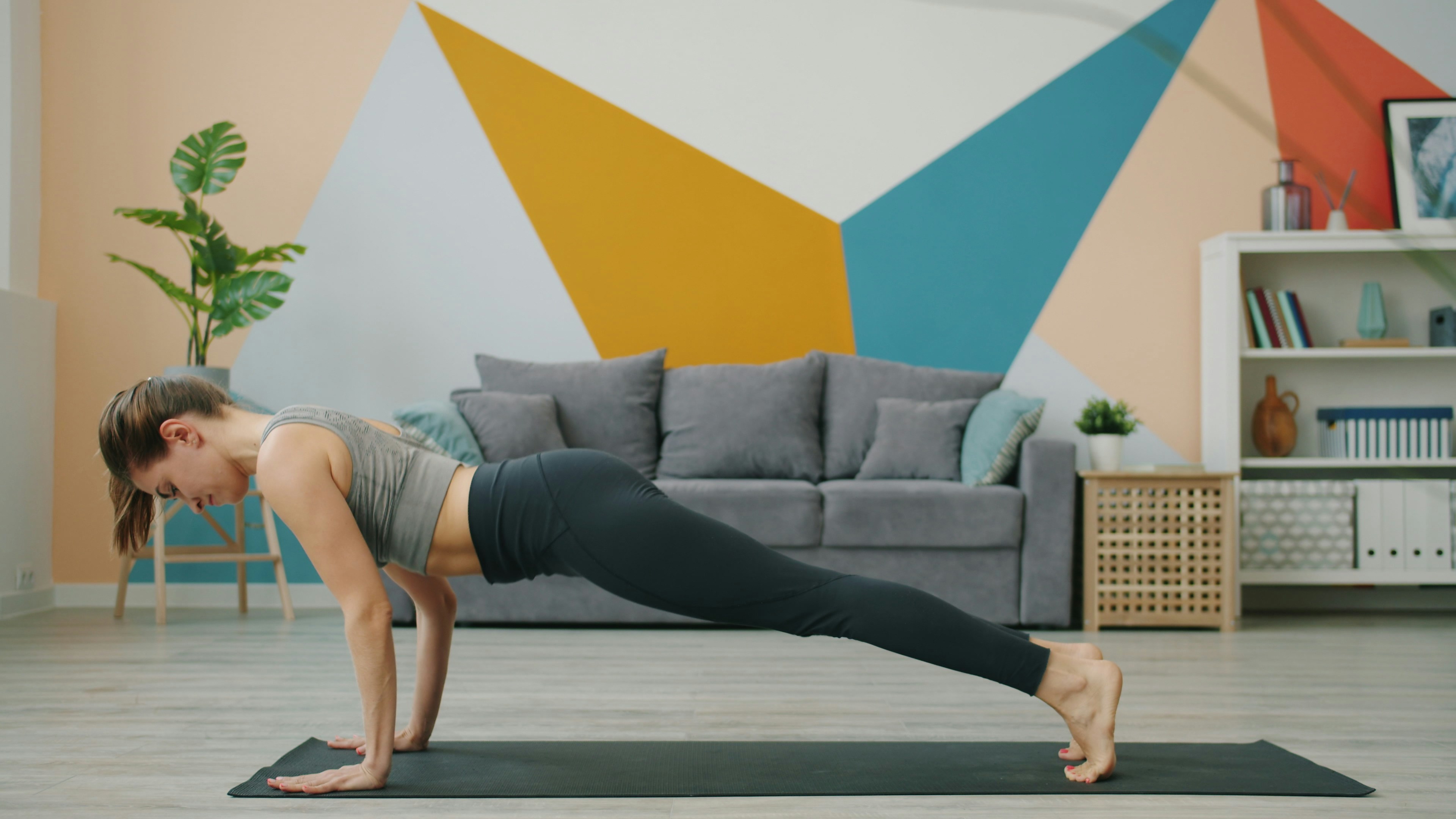
Jump squats become fast tempo bodyweight squats or squat pulses — same muscles, same breathlessness, zero landing. Burpees become step-back burpees, where you step (not jump) your feet back and forward instead of hopping — still a full-body movement, still gets your heart rate up. Mountain climbers become a slower, controlled version or plank shoulder taps, keeping the core and shoulder engagement without the rapid foot-slapping. High knees become marching in place at a fast pace, driving the knees up without the double-impact of a jog in place. Jumping jacks become step-out jacks, where you step one foot out at a time instead of hopping both feet simultaneously.
None of these are a downgrade — they're a different intensity lever. Speed, tempo, and range of motion replace impact as the thing driving your heart rate up.
- Jump squats -> fast tempo bodyweight squats or squat pulses
- Burpees -> step-back burpees (no jump on the way out or in)
- Mountain climbers -> slow controlled mountain climbers or plank shoulder taps
- High knees -> fast marching in place
- Jumping jacks -> step-out jacks (one foot at a time)
Building a real low-noise HIIT circuit
A standard HIIT structure still works — 30-40 seconds of work, 15-20 seconds of rest, 4-6 exercises, 3-4 rounds. What changes is which exercises fill those slots: pull from the quiet-substitute list above instead of their jumping counterparts, and add a mat or thick rug under your workout area specifically to absorb footfall vibration, not as a cosmetic touch.
If your building has genuinely thin floors, adding one or two isometric holds (a wall sit, a plank variation) into the rotation keeps intensity high with zero impact at all — useful as an occasional round rather than the whole workout, since isometric-only HIIT gets repetitive fast.
What still won't be silent, and when to just do it anyway
Breathing hard, moving furniture-free floor space, and general movement noise are not eliminable, and most reasonable neighbors don't expect total silence — they expect you not to be dropping weight or landing jumps directly above their head at 11pm. If you've swapped out the high-impact movements and you're still worried, timing matters more than technique: a mid-day or early-evening session gives you far more margin than a late-night one, regardless of how quiet your exercise selection is.
The real-life verdict
You don't have to give up HIIT in an apartment — you have to give up the specific movements that turn your workout into someone else's ceiling problem. Swap the jump for the step, add a mat under your feet, and keep the tempo and effort where they were. The workout gets just as hard. The noise complaint doesn't happen.