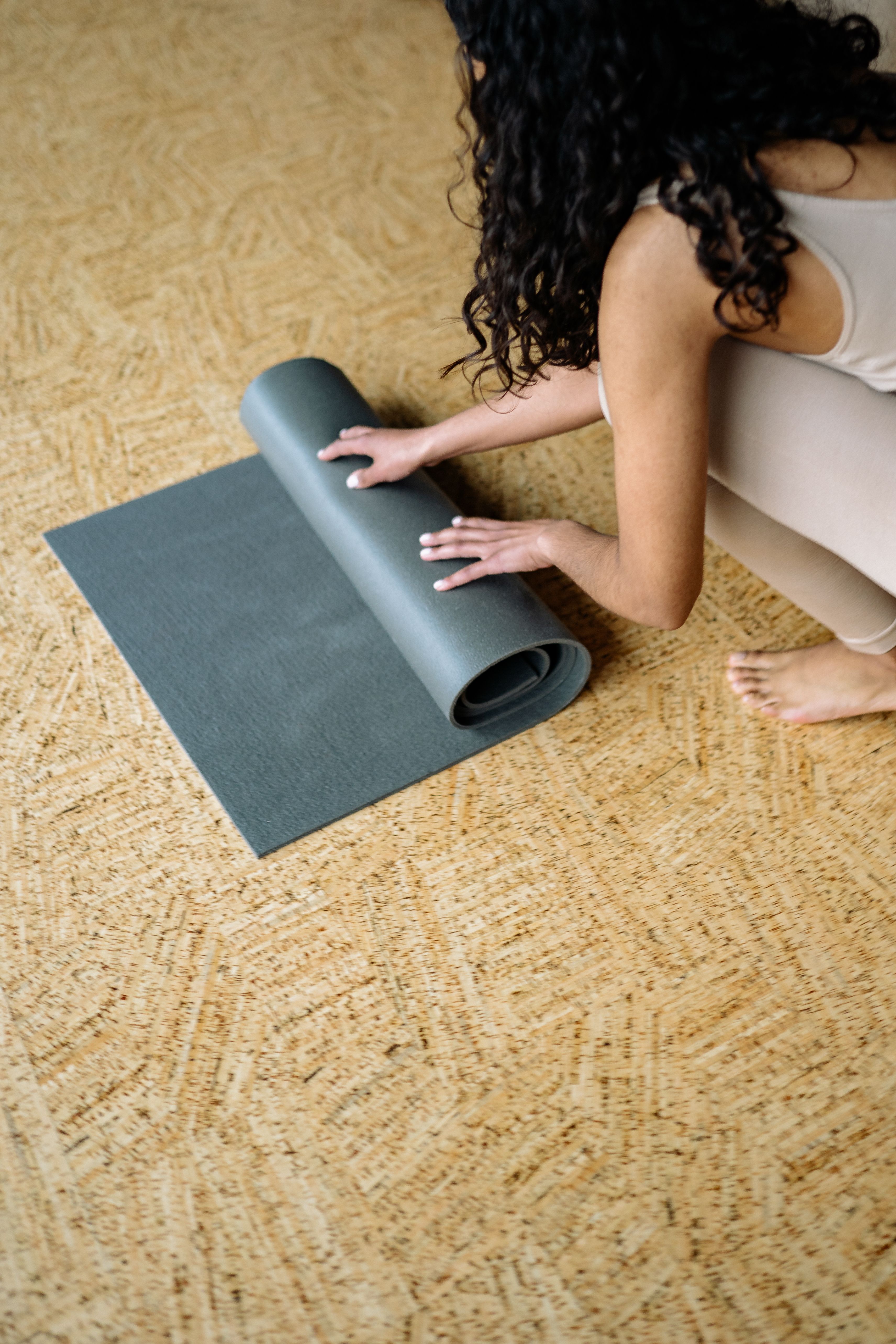
Most home gym floor-protection advice stops at "get a mat." What it doesn't mention is that the mat itself can be part of the problem. Some rubber mats contain antioxidant compounds that react with a polyurethane hardwood finish over time, leaving a cloudy residue or discoloration behind — the exact damage the mat was bought to prevent in the first place. This isn't about noise (already covered in the renter's guide to quieter workouts) or about yoga-mat-style cushioning (covered in the site's yoga mat guide). It's specifically about what's actually safe to put under real equipment — dumbbells, a bench, a bike — on a floor you don't want to damage, or, if you're renting, don't want to pay for at move-out.
The mat problem nobody mentions: rubber vs. your floor's finish
A dropped dumbbell is the obvious risk, and any mat with enough density stops that. The less obvious risk is the finish underneath. Many hardwood floors are sealed with a polyurethane coating, and certain rubber compounds contain antioxidants — commonly BHT — that can chemically react with that coating over months of contact. The result isn't a dramatic stain; it's a cloudy patch or a loss of shine exactly where the mat sat, sometimes not noticed until the mat comes up.
PVC doesn't carry this risk — it's chemically inert against a polyurethane finish, which is worth knowing before defaulting to rubber just because it's the familiar gym-flooring material. If you do go with a rubber mat, a plastic barrier sheet between the mat and the floor prevents the reaction entirely — a five-dollar fix for a problem most buyers never hear about until it's already happened.
Why one big mat beats interlocking tiles in a rental
Interlocking foam or rubber tiles look like the obvious small-space solution, and for a dedicated home gym room they're genuinely fine. In a shared living space or a rental, they have a specific failure mode: grit works its way into the seams between tiles, and every time furniture shifts or someone walks across them, that trapped dirt scratches the actual floor underneath — damage that isn't visible until the tiles come up at move-out.
A single large mat sidesteps this completely. There's no seam for anything to get trapped in, and lifting it for a cleaning check shows exactly what's underneath the whole time, not months after the fact.
Equipment-specific mat vs. full-coverage mat: the real decision point
A PVC equipment mat is sized for a single piece of gear — a bike, a bench, a treadmill — and it's the safer default against the finish-reaction risk above, since that's primarily a rubber-specific concern. It's a protector, not a workout surface in its own right.
A large rubber exercise mat covers considerably more floor — built for a full workout zone, not just one machine. If the floor underneath has a polyurethane finish, that's worth confirming before buying (or asking a landlord or building management if it's not clear), and a barrier sheet underneath removes the concern entirely for a few dollars. For anyone training directly on the floor — bodyweight work, dumbbells that move around rather than staying under one machine — the larger coverage area is a real advantage an equipment-specific mat doesn't offer.
What actually protects your deposit
If you're renting, the real test isn't whether the mat looks fine while it's down — it's what the floor looks like when it comes up. A single-piece mat that doesn't trap grit, doesn't shift during use, and, if it's rubber, doesn't react with the finish, is the version that gives the deposit back intact. Check in on what's underneath occasionally rather than waiting until move-out day to find out.