Jump ropes and mini trampolines both solve the same apartment problem — real cardio in almost zero square feet, for well under $50. Where they split is noise. One transmits impact directly into your floor with every rep; the other is specifically engineered to absorb it. If you've ever gotten a text from a downstairs neighbor mid-workout, this is the comparison that actually matters more than price or calorie burn.
Quick answer
A bungee-cord mini trampoline like the ANCHEER Foldable Mini Trampoline is the quieter option by a real margin -- the bungee system absorbs impact instead of transferring it straight into the floor the way a jump rope's landing does. If floor space and price matter more than noise, a quality speed rope like the WOD Nation Attack Speed Jump Rope is still a legitimate cardio tool -- it's just the noisier of the two, especially on hard flooring.
Comparison table
| Product | Price | Noise Level | Storage Footprint | Best For |
|---|---|---|---|---|
| WOD Nation Attack Speed Jump Rope | $15–$25 | Higher -- direct floor impact each rep | Minimal, fits in a drawer | Ground floor, harder cardio in less space |
| ANCHEER Foldable Mini Trampoline | $70–$110 | Lower -- bungee cords absorb impact | Folds flat, needs a lean-against spot | Upper floors, noise-sensitive buildings |
Details above are editorial summaries and approximate street prices at the time of writing — confirm specifics on each current listing.
Why the noise difference is bigger than it sounds
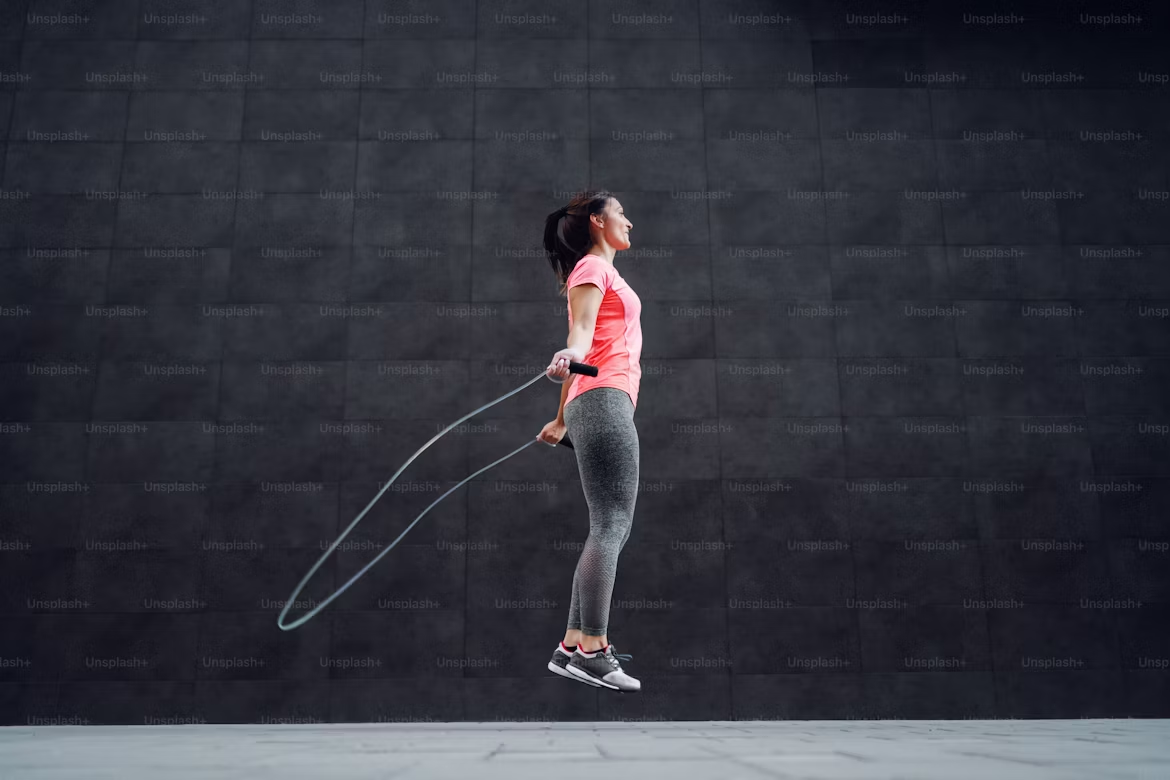
A jump rope doesn't make noise on its own -- your landing does, and that impact goes straight through your feet into the floor every single rep, at whatever rate you're jumping. A rebounder's job is specifically to absorb that same landing force before it reaches the floor. Bungee-based rebounders in particular outperform spring-based ones here, since bungee cords flex and dampen rather than transferring energy the way metal springs can. This is the same principle behind gym flooring mats -- absorption at the point of impact beats trying to muffle the sound after the fact.
What you actually give up with each
A jump rope is unmatched for storage -- it fits in a drawer, a bag, a hook by the door -- and it's a genuinely harder cardiovascular workout at the same time investment. A mini trampoline, even a folding one, still needs a dedicated few square feet when in use, and a spot to lean it when folded. If your apartment is tiny enough that even a folded trampoline is a real storage problem, the jump rope wins on space even though it loses on noise.
How to choose for your specific situation
If you live above another unit and noise complaints are a real concern, prioritize the trampoline -- pair it with a thin mat underneath for extra insurance. If you're on a ground floor, live in a detached unit, or your building has better sound insulation, the jump rope's space efficiency and workout intensity make it the better default. Either way, avoid using a jump rope directly on hard flooring without at least a thin mat underneath -- it meaningfully reduces both noise and joint impact.