Most soundproofing advice assumes you can install acoustic panels or rip up flooring -- not realistic for a renter. But two of the most effective, cheapest fixes for apartment workout noise have nothing to do with construction: stopping vibration at the source, and sealing the gap under your door where sound leaks out most. Both take under 10 minutes to install and cost less than a single cardio session at a boutique gym.
Quick answer
The two highest-impact, lowest-cost fixes are anti-vibration pads under any equipment with legs (cardio machines, benches) and a door draft stopper sealing the gap under your workout room's door. Together they cost under $40 and address two of the most common noise complaint sources -- structural vibration and sound leaking through door gaps -- without any wall modification or landlord approval needed.
Comparison table
| Product | Price | Noise Type Addressed | Installation | Best For |
|---|---|---|---|---|
| BestXD Anti-Vibration Pads (4-Pack) | $15–$20 | Structural vibration from equipment | Place under equipment legs, no tools | Cardio machines, benches, upper-floor apartments |
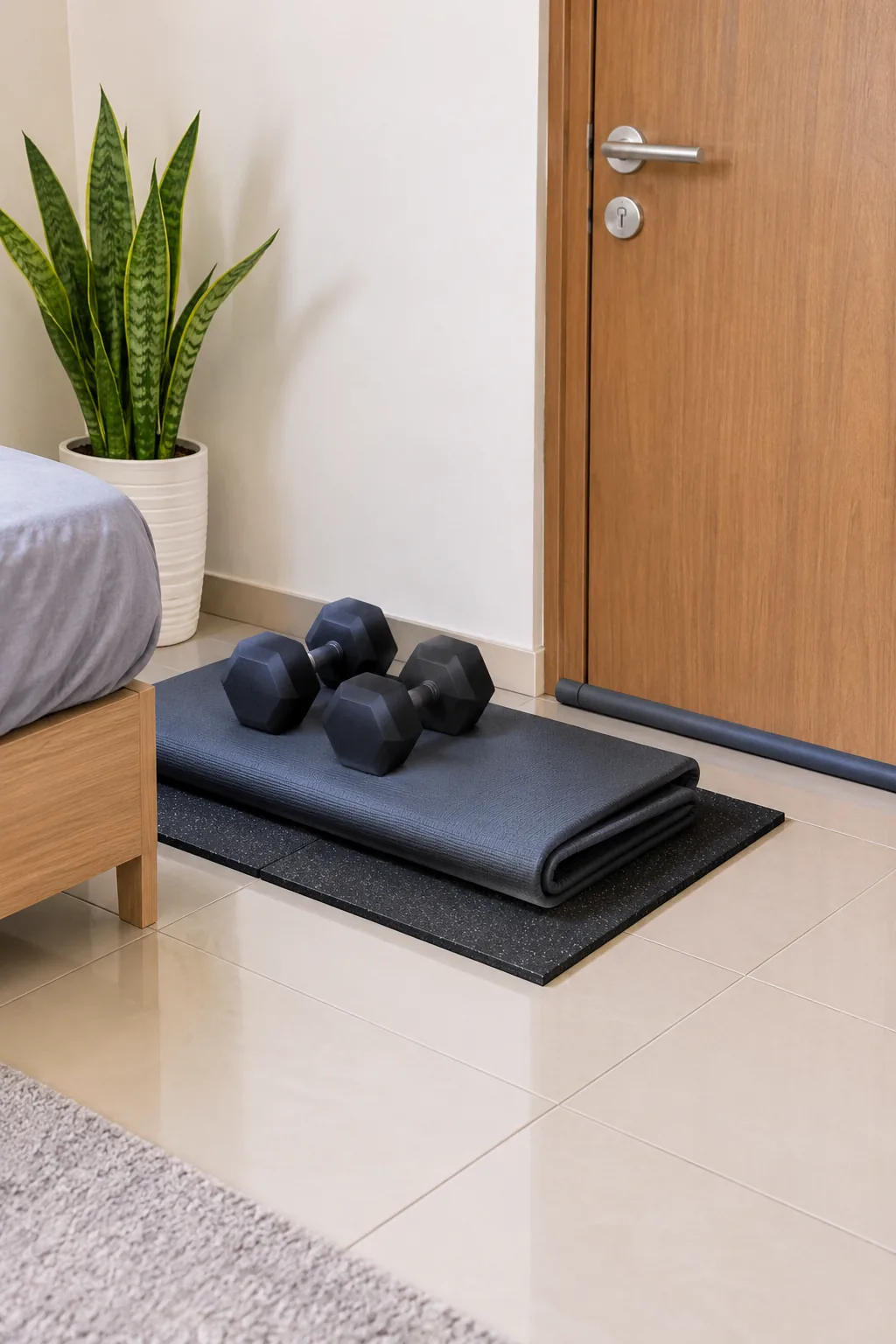
| Holikme Door Draft Stopper (2-Pack) | $10–$15 | Airborne sound leaking under doors | Self-adhesive, under 10 minutes | Sealing off a dedicated workout room |
Details above are editorial summaries and approximate street prices at the time of writing — confirm specifics on each current listing.
Why these two fixes specifically work
Vibration noise and airborne noise travel differently, which is why you need both fixes rather than just one. Equipment with legs -- a stepper, an elliptical, even a loaded bench -- transmits vibration directly into the floor structure, which is what a downstairs neighbor actually feels and hears, sometimes more than what you'd perceive as loud in the room itself. A door gap, meanwhile, is one of the most overlooked paths for airborne sound (voices, music, impact noise) to travel into a hallway or adjacent room -- sealing it is a small fix with an outsized result.
What these fixes won't solve
Neither of these addresses heavy dropped weights or high-impact jumping directly -- that's what a proper gym flooring mat is for, and the two work well together rather than as substitutes. Think of anti-vibration pads and door seals as closing the gaps a good flooring mat doesn't cover, not a replacement for one.
Best Mats to Protect Hardwood Floors From Home Gym Equipment
Other zero-cost habits worth pairing with these
Time your loudest activities (jump rope, dropped weights) to reasonable hours, and consider a quick heads-up text to a downstairs neighbor when you're starting a home gym -- most noise complaints happen because a neighbor is caught off guard, not because the noise itself is unbearable. This costs nothing and often prevents friction before it starts.